The pale half-moon near the base of your nail has a name, the lunula, and it draws far more worry online than it deserves. Whether yours are large, small, or hidden under the skin is mostly a matter of how you are built, not a health scorecard. Let us clear up the myth and then cover the few situations where the lunula does say something.
If you like keeping an eye on changes over time, you can scan your nails and compare them across months.
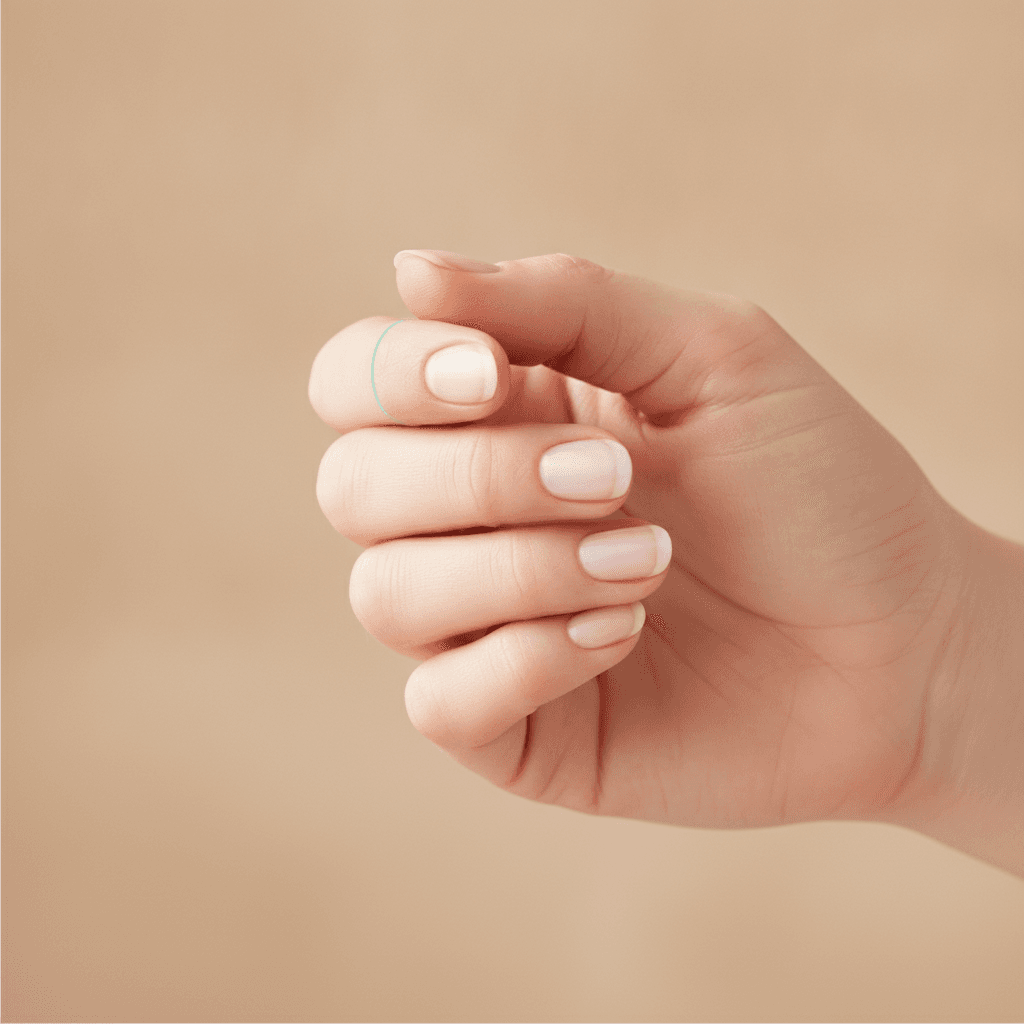
What the lunula is
The lunula is the visible front edge of the matrix, the tissue that builds your nail. You usually see it most clearly on the thumb, and it often fades to almost nothing on the little finger. That gradient is normal. The plate looks pale there because the matrix underneath is not yet fully attached to the nail bed.
The missing half-moon myth
A popular online claim says that absent half-moons mean poor health. It does not hold up. Plenty of perfectly healthy people have lunulae that are small or tucked out of sight beneath the cuticle. Size and visibility vary with your anatomy, how you trim your cuticles, and even the angle of the light. On their own, missing half-moons are not a diagnosis.
When the lunula can matter
Color is more telling than size. A few patterns are worth noting:
- A red or pink lunula can occasionally accompany conditions such as heart failure or certain autoimmune diseases
- A blue lunula may point to circulation problems or, rarely, exposure to certain metals or medications
- A lunula that suddenly disappears across many nails, together with other symptoms, can reflect anemia or thyroid issues
The theme is the same as the rest of nail reading. One feature in isolation means little. A color change across several nails, paired with how you feel, is what earns a closer look.
What to do
For the vast majority of people, the answer is simple: nothing. Your half-moons are doing their job whether you can see them or not. Resist the urge to read a verdict into their size, and focus on changes that show up across many nails at once.
When to see a doctor
Mention it to a clinician if you notice:
- A red, pink, or blue color to the lunula rather than pale
- Half-moons disappearing suddenly across many nails with other symptoms
- Lunula changes alongside fatigue, breathlessness, or swelling
- Any nail change with pain, lifting, or discoloration
Frequently asked questions
Is it bad to have no half moons on your nails?+
Usually not. Many healthy people have small lunulae or ones hidden under the skin. Missing half moons by themselves are rarely a sign of disease.
What do half moons on nails indicate?+
Mostly your individual anatomy. Their size varies from finger to finger and person to person. Color changes, like a red or blue lunula, are more meaningful than size.
Why did my half moons disappear?+
Often nothing changed except how much is visible. If they vanished suddenly across many nails along with other symptoms, mention it to your doctor.
Related
Sources
- Cleveland Clinic, Nails and your health
- Healthline, Nail health: what your nails say about your wellness
This article is for general education and is not medical advice. It does not replace a consultation with a qualified clinician. If a symptom worries you, see a doctor.