Finding hair on your pillow or in the shower drain is alarming, but most of the time it is normal. People shed 50 to 100 hairs a day as part of the hair cycle, and that is turnover, not loss. The change worth attention is different: hair that thins in a pattern and does not grow back as fast as it falls.
This guide explains how to tell ordinary shedding from real thinning, the stages and patterns to recognize, and when a change is worth a doctor. Want to track your hairline over time? Scan in 60 seconds.
- •Losing 50 to 100 hairs a day is normal shedding, not hair loss.
- •Shedding is diffuse and grows back; true loss follows a pattern, a receding hairline, a thinning crown, or a widening part, and outpaces regrowth.
- •Early treatment works best, so a change that lasts more than three to six months is worth a doctor's visit, especially if it is patterned.

What is normal
Each hair follicle cycles through growth, a short rest, and a shed, then starts again. Because your follicles are not in sync, you lose a steady trickle every day, around 50 to 100 hairs, with a bit more when you wash or brush. As long as new hairs are coming through at a similar rate, your hair is simply renewing itself.
Shedding versus thinning
This is the distinction that matters. Shedding is diffuse, comes from all over the scalp, and is usually temporary, often a reaction to stress, illness, or childbirth months earlier. True thinning is different: it follows a pattern, the regrowth cannot keep up, and over time you see more scalp.
A quick check helps. Look at a shed hair. A small white bulb at the end means it completed its cycle and fell naturally. A blunt, ragged end with no bulb is breakage, which is a hair-care issue rather than loss.
Reading the signs
Hairline
A hairline that shifts back a little in your twenties and then settles is usually a mature hairline, which is normal. A hairline that keeps moving, especially into an M-shape at the temples, points to a receding hairline.
Crown and part
Thinning at the crown or a part that looks wider than it used to are classic patterned signs. Holding a mirror to the back of your head, or comparing photos over months, makes a crown change obvious.
Scalp
An itchy, flaky, red, painful, or scarred scalp suggests something beyond ordinary shedding and is worth a closer look.
Patterns and stages
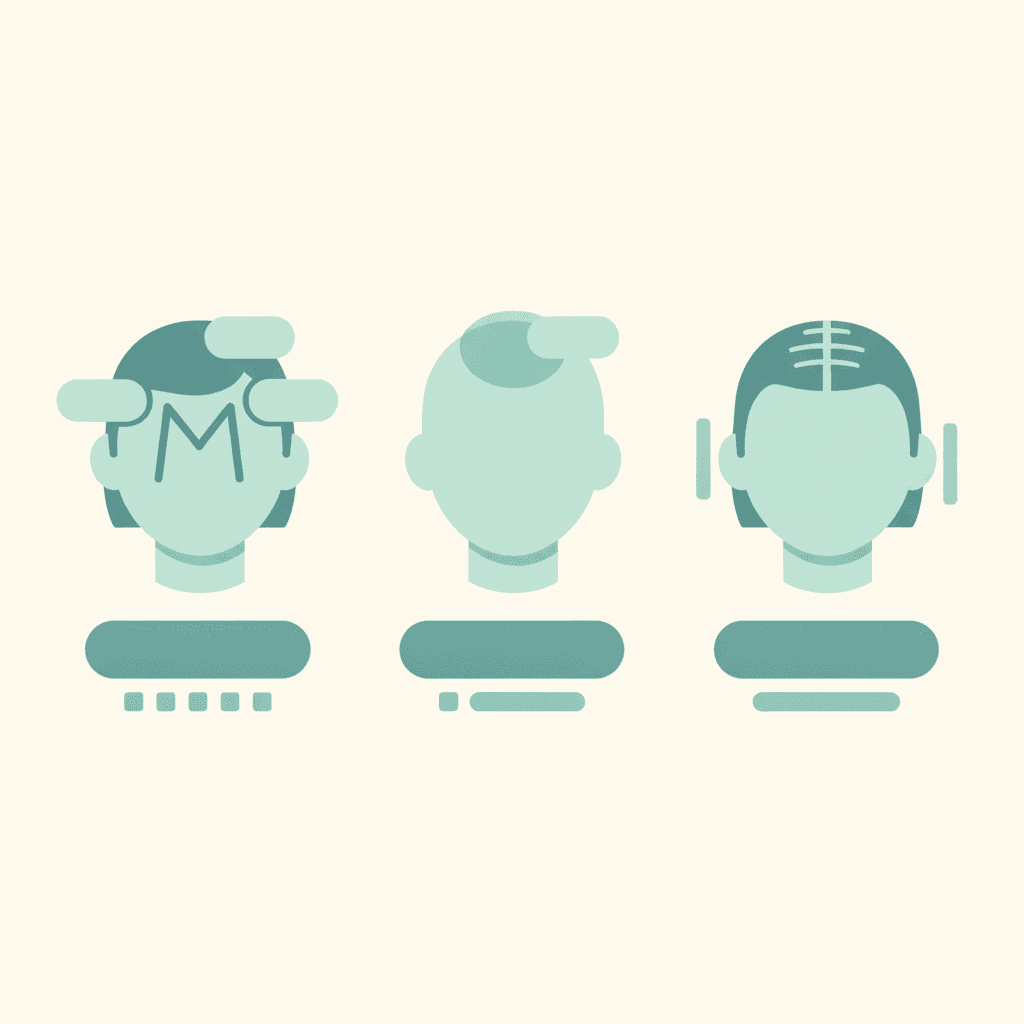
Patterned hair loss is mapped on scales. The Norwood scale tracks male pattern loss in stages, from a maturing hairline to broader thinning, while the Ludwig scale describes the diffuse thinning over the top that is more common in women. Knowing roughly where you sit helps you and a clinician judge whether it is changing.
When to see a doctor
Most shedding settles on its own. Book a visit if:
- Thinning is patterned (receding hairline, thinning crown, widening part)
- Heavy shedding lasts more than three to six months
- The scalp is itchy, painful, scaly, or shows bald patches
- Hair loss comes with fatigue, weight change, or other symptoms
Early treatment is far more effective than late, so it is worth checking sooner rather than waiting.
Frequently asked questions
How much hair loss is normal?+
Most people shed 50 to 100 hairs a day, and a little more on wash days. That is normal turnover, not hair loss, as long as new hair is growing back at a similar rate.
How do I know if my hair is thinning or just shedding?+
Shedding is diffuse and temporary, and the hair grows back. Thinning follows a pattern (a receding hairline, a thinning crown, a widening part) and the regrowth does not keep up.
When should I see a doctor about hair loss?+
If thinning is patterned, lasts more than three to six months, or comes with an itchy, painful or scarred scalp, see a doctor. Early treatment is far more effective than late.
Explore
Sources
- American Academy of Dermatology, hair loss types and treatment resources
- Healthline, Hair shedding vs hair loss
This article is for general education and is not medical advice. It does not replace a consultation with a qualified clinician. If a symptom worries you, see a doctor.