Pulling a clump from the drain feels like proof you are going bald, but usually it is not. The body sheds 50 to 100 hairs a day, and washing or brushing collects several days' worth at once. The real question is not how many hairs you see today, but whether your hair is renewing itself or slowly losing ground.
Here is how to tell ordinary shedding from real hair loss, with a couple of simple checks. You can also track your hairline over time.
- •Shedding 50 to 100 hairs a day is normal and grows back; it is diffuse, not patterned.
- •Hair loss outpaces regrowth and usually follows a pattern: receding hairline, thinning crown, or widening part.
- •Check the hair end: a tiny white bulb means it shed naturally; a blunt ragged end means breakage, not loss.
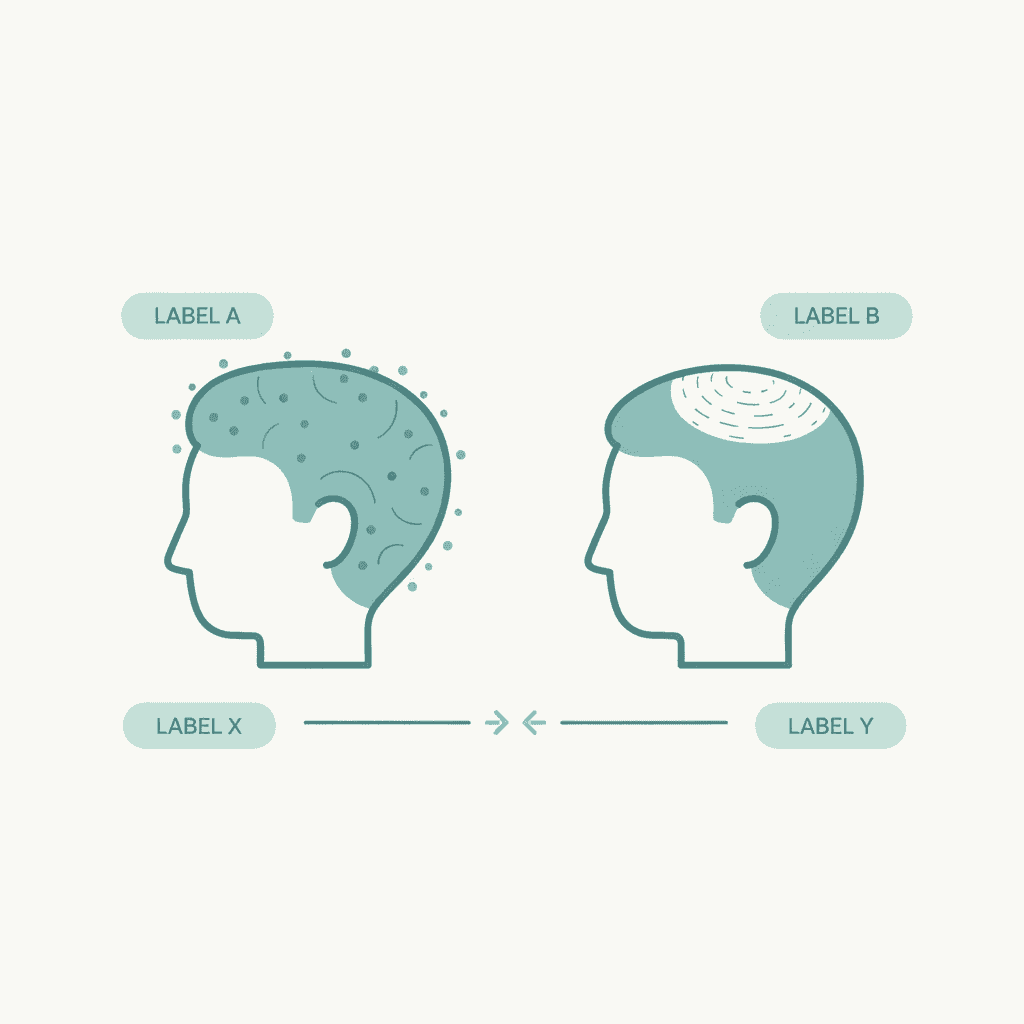
What shedding is
Shedding is the normal end of the hair cycle. Each follicle grows a hair for years, rests briefly, then releases it so a new one can start. Because follicles are out of sync, you lose a steady trickle every day. Shedding is diffuse, meaning it comes evenly from all over the scalp, and it grows back.
A common, heavier version is telogen effluvium, a temporary surge of shedding that follows a stressor such as illness, surgery, childbirth, or a crash diet by two to three months. It looks scary but usually recovers on its own.
What hair loss is
Hair loss is when hairs fall faster than they regrow, so over time you see more scalp. The most common kind, androgenetic or pattern loss, follows a recognizable shape: a receding hairline, thinning at the crown, or a widening part. The hairs also get finer and shorter over time, a process called miniaturization, before they stop growing.
Two quick checks
- The bulb test. Look at a fallen hair. A small white bulb at the root means it completed its cycle and shed naturally. A blunt or frayed end with no bulb is breakage, which is a hair-care problem, not loss.
- The pattern test. Shedding is even all over. Loss concentrates in a pattern. If you are losing ground at the temples, crown, or part specifically, lean toward loss.
Time is the tiebreaker
A few weeks of heavier shedding after a stressful stretch is almost always temporary. Shedding that drags on past three to six months, or thinning that follows a clear pattern, is the kind to get assessed, because early treatment holds onto far more hair than late treatment.
When to see a doctor
Book a visit if:
- Shedding stays heavy for more than three to six months
- You see a pattern: receding hairline, thinning crown, or widening part
- The scalp is itchy, sore, scaly, or shows bald patches
- Hair changes come with fatigue, weight change, or feeling cold
Frequently asked questions
Is it normal to lose a lot of hair in the shower?+
Often yes. Washing dislodges hairs that were already shed, so wash days look dramatic. It is the daily average over weeks, not one shower, that matters.
How do I know if it is shedding or hair loss?+
Shedding is diffuse and temporary and grows back. Hair loss follows a pattern and the regrowth cannot keep up. Time and pattern are the tells.
When does shedding become a problem?+
If heavy shedding lasts more than three to six months, or you start to see a pattern and more scalp, it is worth a doctor's visit.
Related
Sources
- BosleyMD, Hair shedding vs hair loss: key differences
- American Academy of Dermatology, hair loss resources
This article is for general education and is not medical advice. It does not replace a consultation with a qualified clinician. If a symptom worries you, see a doctor.