Flakes on your shoulders feel like one problem with one fix, but dandruff and a dry scalp are nearly opposites. One comes from too much oil and a yeast, the other from too little moisture. Treat them the same way and you can easily make things worse, so the first job is telling which you have.
Here is how to spot the difference and what actually helps each. You can also check your scalp over time.
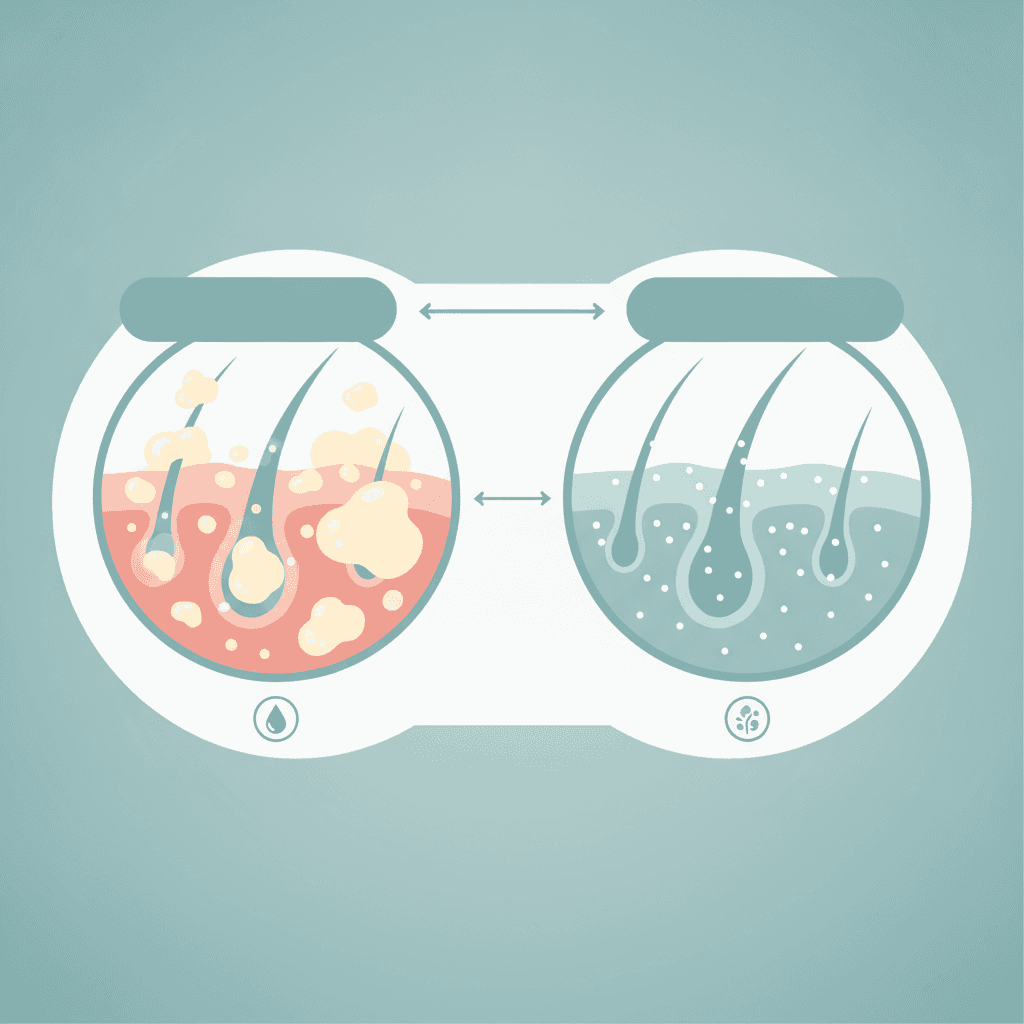
- •Dandruff (seborrheic dermatitis) is oily, with larger yellow-white flakes and a yeast involved; dry scalp gives small dry white flakes from a lack of moisture.
- •They need opposite fixes: dandruff responds to anti-dandruff shampoo, dry scalp to gentler washing and moisture.
- •Thick silvery scales, well-defined patches, or flaking that will not settle can be psoriasis or another condition, so see a doctor if it persists.
Dandruff
Dandruff is a mild form of seborrheic dermatitis. The scalp tends to be oily, the flakes are larger and yellowish, and there is often itching and some redness. It is linked to a yeast called Malassezia that lives on everyone's skin but irritates some people's scalps. It usually needs an active treatment rather than just moisture.
Dry scalp
A dry scalp is simply skin short on moisture, the same as dry skin anywhere. The flakes are small, white, and dry, the skin can feel tight, and it often flares in cold, dry weather or with harsh shampoo and hot water. Dry hair usually comes along with it.
How to tell them apart
- Flake size and color: larger and yellowish suggests dandruff, small and white suggests dry scalp
- Oily or dry: a greasy scalp leans dandruff, a tight dry scalp leans dry skin
- What helps: if moisturizer and gentler washing calm it, it was likely dry scalp; if it needs anti-dandruff shampoo, it was dandruff
What helps each
- Dandruff: an anti-dandruff shampoo with zinc pyrithione, ketoconazole, or selenium sulfide, used as directed and left on for a few minutes
- Dry scalp: wash less often and with a gentle shampoo, use cooler water, and add a light scalp oil or moisturizer
When it is something else
Some flaking is neither. Thick silvery scales on sharply defined patches suggest scalp psoriasis, and stubborn, spreading redness can be eczema or a fungal infection. If it will not settle with the usual care, a doctor can sort it out.
When to see a doctor
Book a visit if flaking is severe or spreading, the scalp is very red, sore, or scabbing, you see thick silvery patches, or it comes with hair loss.
Frequently asked questions
How do I know if I have dandruff or a dry scalp?+
Dandruff flakes are larger, yellowish and a bit oily, on a scalp that often feels greasy. Dry scalp flakes are small, white and dry, with skin that feels tight, often worse in winter.
What is the difference in treatment?+
Dandruff responds to anti-dandruff shampoo with zinc pyrithione, ketoconazole or selenium sulfide. Dry scalp prefers gentler, less frequent washing and added moisture. Using the wrong one can make it worse.
When is scalp flaking something more serious?+
Thick silvery scales, sharply defined patches, redness that spreads, or flaking that will not clear can be psoriasis or eczema, and are worth a doctor's look.
Related
Sources
- American Academy of Dermatology, dandruff and seborrheic dermatitis
- Cleveland Clinic, scalp conditions resources
This article is for general education and is not medical advice. It does not replace a consultation with a qualified clinician. If a symptom worries you, see a doctor.