If your hair started falling out in handfuls a couple of months after a big life event, an illness, a surgery, a birth, or a stressful stretch, there is a good chance it is telogen effluvium. It looks frightening because the shedding is heavy, but it is usually temporary, and the hair grows back once the trigger passes.
Here is what telogen effluvium is, why it lags behind its trigger, and when shedding is worth investigating. You can also track your hair through the recovery.
- •Telogen effluvium is a temporary, diffuse shedding that starts two to three months after a trigger like illness, surgery, childbirth, stress or a crash diet.
- •It thins hair evenly all over, without bald patches or a receding hairline, and usually recovers within three to six months once the trigger passes.
- •Shedding that lasts beyond six months, or comes with fatigue or feeling cold, is worth a thyroid and iron check.
What it is
At any time, most of your hair is growing and a small share is resting before it sheds. A shock to the body can push an unusually large number of follicles into that resting phase at once. They hold on for a couple of months, then let go together, which is why the shedding seems to come out of nowhere two to three months after the event.
Common triggers
The trigger is almost always something that happened weeks earlier:
- A high fever or a serious illness
- Surgery or a hospital stay
- Childbirth, where the shedding often appears a few months postpartum
- Severe physical or emotional stress
- A crash diet or sudden weight loss
- A new medication, or a thyroid or iron problem
How it looks
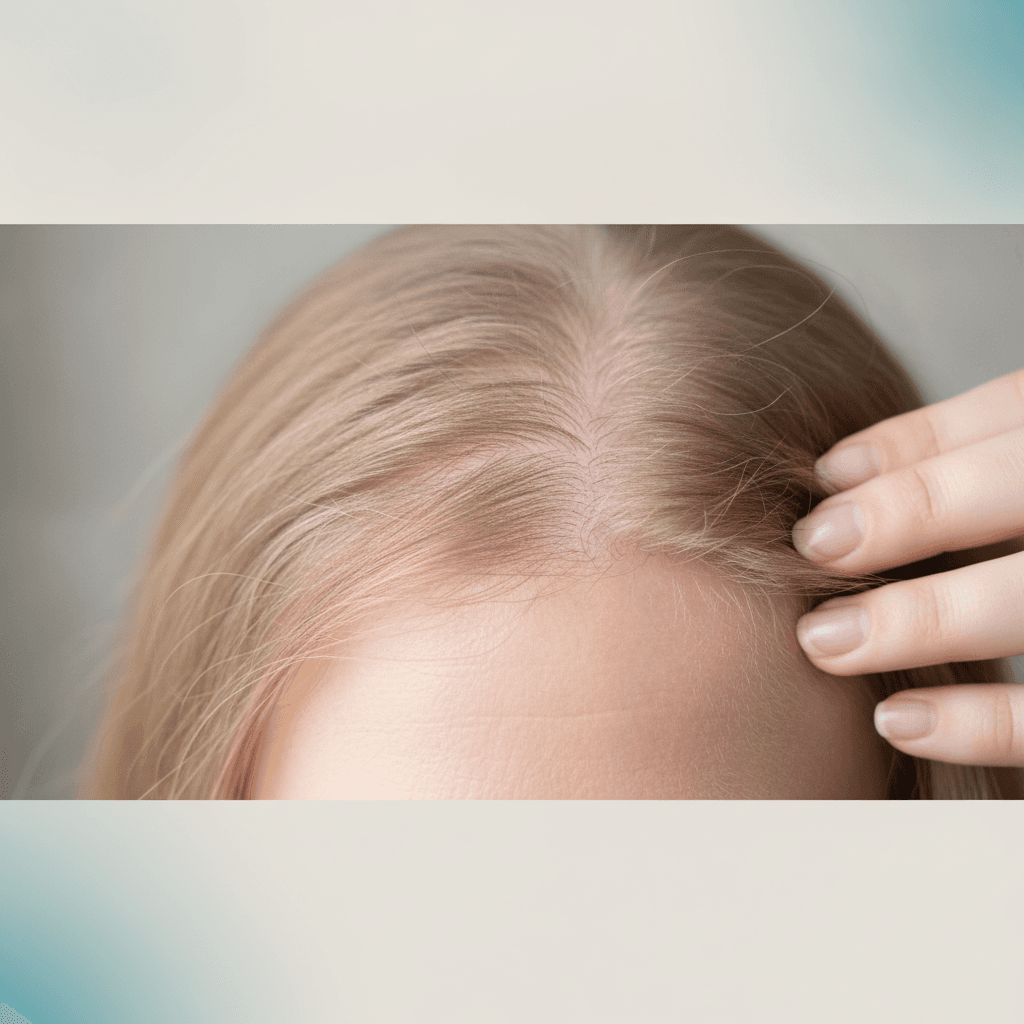
Telogen effluvium is diffuse. The hair thins evenly across the whole scalp rather than at the hairline or crown, and there are no bald patches. You may notice more hair in the brush, a thinner ponytail, or more scalp showing under bright light. Because it is not patterned, it looks different from hair loss of the androgenetic kind.
The timeline
The reassuring part is the follicles are not damaged, just resting. Once the trigger resolves, shedding settles within three to six months and the hair regrows over the following months, sometimes with short new fringe hairs at the hairline as proof of regrowth. Shedding that drags on beyond six months is called chronic telogen effluvium and is worth a closer look.
When to see a doctor
See a doctor if:
- Heavy shedding lasts more than six months
- You also feel tired, cold, or notice weight changes, which can point to thyroid or iron issues
- You see a pattern emerging rather than even thinning
- The scalp becomes itchy, sore, or shows bald patches
Frequently asked questions
How long does telogen effluvium last?+
Usually three to six months once the trigger has passed, with full thickness returning over the following months. Shedding that lasts beyond six months is called chronic and is worth investigating.
What triggers telogen effluvium?+
A physical or emotional shock: a high fever or illness, surgery, childbirth, severe stress, a crash diet, a new medication, or a thyroid or iron problem. The shedding shows up two to three months later.
Will my hair grow back after telogen effluvium?+
In most cases yes. The follicles are not damaged, just temporarily pushed into resting, so once the trigger resolves the hair regrows.
Related
Sources
- American Academy of Dermatology, telogen effluvium and hair shedding
- Cleveland Clinic, hair loss resources
This article is for general education and is not medical advice. It does not replace a consultation with a qualified clinician. If a symptom worries you, see a doctor.