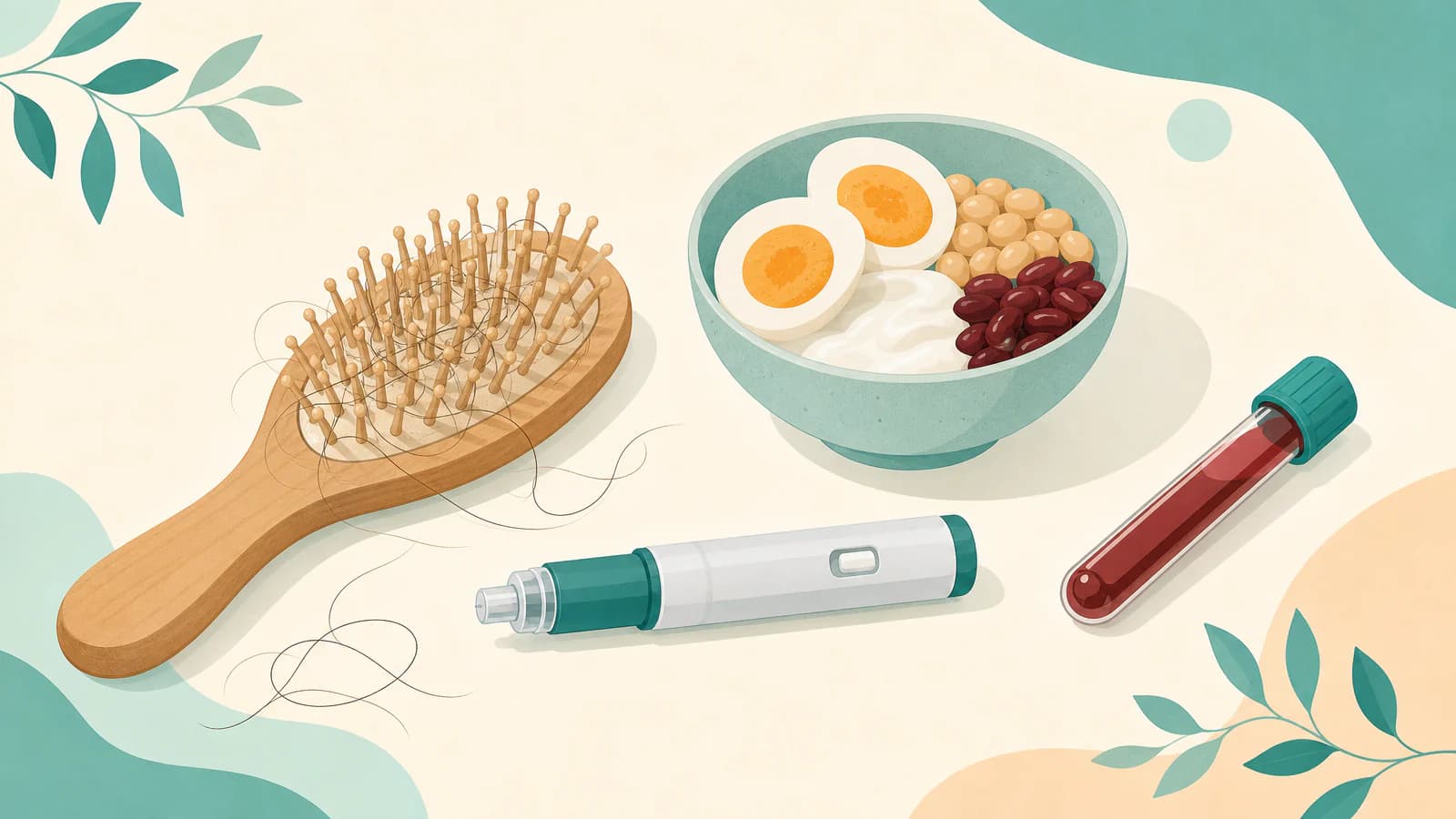
The shots are working. The weight is coming off. And now there is hair in the shower drain, and every ad in your feed is selling a "GLP-1 hair" gummy.
Before you buy anything, here is what is worth taking, what to test first, and what to skip.
The short answer
Protein is the supplement that matters most, and it is often food. After that, a basic multivitamin is a sensible safety net while you eat much less. Single nutrients (iron, vitamin D, B12, zinc) earn their place only when a blood test shows you are low. Megadose biotin and proprietary "hair" blends are the ones to skip. No pill switches the shedding off; it usually settles once weight loss slows and intake improves. Talk to your prescriber before you add anything.
- •Protein comes first. A 2025 joint advisory on GLP-1 nutrition mentions 1.2 to 1.6 g per kg of body weight a day during active weight loss, or a simple 80 to 120 g a day.
- •A basic multivitamin at about 100% of the Daily Value is a sensible safety net when you eat much less. Megadoses do not grow hair faster.
- •Take iron, vitamin D, B12 or zinc on their own only when a blood test shows you are low.
- •Skip megadose biotin and proprietary hair blends. Biotin rarely helps and can throw off blood tests, including troponin.
- •No supplement switches shedding off. It usually settles once weight loss slows and intake improves.
Why supplements come into it at all
Most hair loss on GLP-1 drugs is telogen effluvium: fast weight loss and a sudden drop in food push many hairs into their resting phase, and they fall out a few months later. Calorie intake falls by 16 to 39% on these drugs, according to a 2025 joint advisory from four medical and nutrition societies, so gaps in protein, iron and other nutrients become more likely. Supplements help only by closing those gaps. For the full story on why it happens, how common it is and when it stops, read GLP-1 hair loss: why it happens and what to do.
The same advisory lists the signs of a real deficiency: tiredness beyond what you would expect, excessive hair loss, flaky or itchy skin, poor wound healing and unusual bruising. If several fit, get tested before you buy.
The nutrients that matter, ranked
| Rank | Nutrient | Why it matters for hair | Take it when | Watch out |
|---|---|---|---|---|
| 1 | Protein | Low protein intake is a known shedding trigger | Always: hit a daily target, food first | Hard to reach on a small appetite |
| 2 | Multivitamin and mineral | Covers small gaps while you eat less | As a safety net, about 100% of the Daily Value | No biotin megadose; check vitamin A and selenium |
| 3 | Iron | Iron deficiency is a listed shedding trigger | Ferritin or blood count shows you are low | Adult upper limit 45 mg a day |
| 3 | Vitamin D | Named by the advisory as a nutrient to watch | A 25-hydroxy vitamin D test is low | Adult upper limit 4,000 IU a day |
| 3 | Vitamin B12 | Also named by the advisory | Your B12 is low, or you eat little meat, fish or dairy | Tell your doctor if you take metformin |
| 3 | Zinc | Linked to the hair cycle, role not fully clear | A zinc test is low | Adult upper limit 40 mg a day; high doses lower copper |
| Skip | Biotin megadose | Deficiency is rare | Only for a confirmed deficiency | Distorts lab tests, including troponin |
1. Protein: the one that matters most
Low protein intake is a classic trigger for telogen effluvium (StatPearls), and it is the easiest gap to fall into when a few bites fill you up.
How much:
- The adult recommended allowance is 0.8 g per kg of body weight a day.
- The 2025 joint advisory mentions 1.2 to 1.6 g per kg a day during active weight loss.
- Because body weight can overstate needs in larger bodies, it also offers a simpler goal: 80 to 120 g a day.
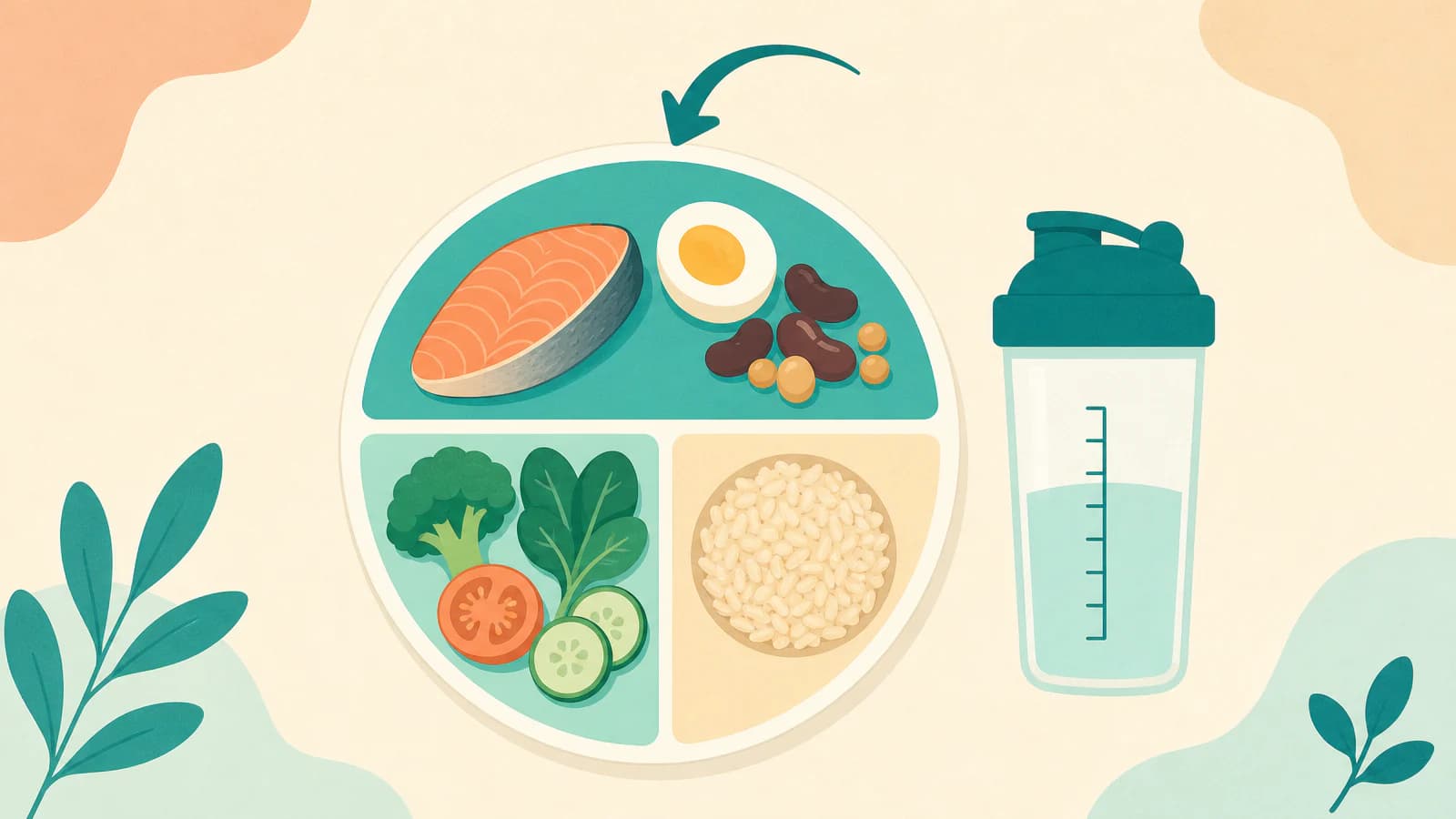
How to get there, per the advisory: eat the protein part of the meal first, before you feel full. Lean on fish, eggs, dairy, poultry, beans, lentils and tofu. Pair it with strength training, which the advisory recommends to protect muscle while you lose fat. If you track your intake for a few days and still fall short, a protein shake fills the rest.
2. A basic multivitamin: the safety net
When you eat a third less food, small vitamin and mineral gaps add up. A plain multivitamin and mineral at about 100% of the Daily Value covers them without guesswork. The joint advisory says supplements can be considered for at-risk nutrients such as vitamin D, calcium and B12, tailored to the person.
What to avoid in a multivitamin: megadoses. They do not grow hair faster, and too much vitamin A or selenium can itself cause hair loss.
3. Iron, vitamin D, B12 and zinc: only when a test says so
These are the targeted fixes, and they work best when a lab result tells you the dose and the recheck date.
- Iron. Iron deficiency is a known shedding trigger. Dermatologists at the Cleveland Clinic screen hair loss patients for it, while being clear that the evidence for iron pills without anemia is limited. If your ferritin is low, your doctor will set the dose.
- Vitamin D and B12. Both are on the advisory's list of nutrients to watch on GLP-1 drugs. Low B12 is more likely if you eat little animal food or take metformin.
- Zinc. Low zinc is linked to hair loss, but taking it "just in case" can upset your stomach and, at 50 mg or more a day for weeks, lower your copper.
4. What to skip
- Megadose biotin (5,000 to 10,000 mcg). Real biotin deficiency is rare, and the FDA warns that high doses can make lab tests falsely high or low, including troponin, the test for a heart attack. Full details in biotin for hair: does it work?
- Proprietary "hair" blends and gummies. You cannot see the dose of each ingredient, and they rarely address protein, the gap that matters most.
- Collagen as a hair fix. It has no authorised health claim in the EU, and it does not replace getting enough total protein.
Not sure what is low? Check the signs first: our guide to vitamin deficiency skin symptoms shows which clues point to which nutrient.
The labs to ask your prescriber for
Bring this list to your next visit:
- Ferritin and a complete blood count (CBC) for iron stores and anemia
- 25-hydroxy vitamin D
- Vitamin B12
- Zinc
- TSH for thyroid, since an underactive thyroid is a shedding trigger on its own
If you take biotin in any form, including a multivitamin or a hair, skin and nail product, tell your doctor and the lab before the blood draw.
What helps besides supplements
- A steadier pace. The American Academy of Dermatology says people prone to hair loss should lose weight slowly on these drugs. Ask your prescriber whether your dose steps suit you, and never change the dose on your own.
- Gentle hair care. Loose styles, less heat and no harsh chemical treatments while the shed runs its course.
- The same logic after childbirth or menopause. Postpartum shedding follows the same pattern: find the trigger, check iron and thyroid, eat enough protein. Thinning around menopause can be shedding, pattern hair loss or both, so a dermatologist's look helps if it is not settling.
When supplements are not the answer
See a doctor or dermatologist if shedding lasts longer than six months, if you see patches, a widening part or a receding hairline (pattern hair loss can show up alongside shedding), if your scalp itches or hurts, or if you are struggling to eat or keep food down. Not sure whether it is shedding or real thinning? Read shedding vs hair loss, or check your hair with a photo.
 Shedding or thinning? Add a photo of your part lineAI describes what it sees at your part and crown, and you get a hair recovery plan as a PDF: care steps, what to ask your doctor and a date to re-check. It does not diagnose. One check is $4.99.Add a photo
Talk to your doctor before starting any supplement, especially if you are pregnant, breastfeeding, take other medicines, or have kidney or liver disease.
Frequently asked questions
What supplements help hair loss on a GLP-1?+
Start with protein, from food and then a shake if you fall short. A basic multivitamin at about 100% of the Daily Value can cover small gaps. Take single nutrients such as iron, vitamin D, B12 or zinc only if a blood test shows you are low, at the dose your doctor suggests.
How much protein do I need on a GLP-1?+
The recommended daily allowance for adults is 0.8 g per kg of body weight. A 2025 joint advisory on GLP-1 nutrition mentions 1.2 to 1.6 g per kg a day during active weight loss, or an absolute target of 80 to 120 g a day. Check your own number with your prescriber or a dietitian, especially if you have kidney disease.
Should I take biotin for hair loss on Ozempic or Zepbound?+
Usually not. Biotin only helps hair when you are truly deficient, which is rare. High doses can make some blood tests falsely high or low, including the troponin test used to check for a heart attack, according to the FDA.
Should I take iron or zinc for GLP-1 hair loss?+
Only if a test shows you are low. Iron deficiency is a known shedding trigger, so ask for ferritin and a blood count. Zinc has an adult upper limit of 40 mg a day, and high doses can lower copper.
Is a multivitamin worth it on a GLP-1?+
For many people, yes, as a safety net. Calorie intake drops by 16 to 39% on these drugs, which makes small vitamin and mineral gaps more likely. Pick one at about 100% of the Daily Value, without a biotin megadose, and check it with your prescriber.
Which blood tests should I ask for?+
Ferritin and a complete blood count, 25-hydroxy vitamin D, vitamin B12, zinc and thyroid (TSH). Tell the lab if you take biotin in any product.
Should I stop my GLP-1 because of hair loss?+
Do not stop or change your dose on your own. Talk to your prescriber. Slowing the pace of weight loss, eating enough protein and correcting real nutrient gaps are the usual first steps.
Related
- GLP-1 hair loss: why it happens and what to do
- Supplements for skin, hair and nails: what the evidence says
- Biotin for hair: does it work?
- Telogen effluvium, the shedding that follows a shock
Sources
- Mozaffarian D, Agarwal M, Aggarwal M, et al. Nutritional priorities to support GLP-1 therapy for obesity: a joint Advisory from the American College of Lifestyle Medicine, the American Society for Nutrition, the Obesity Medicine Association, and The Obesity Society. American Journal of Clinical Nutrition. 2025. PubMed
- Gupta AK, Teasell EM, Economopoulos V, Mirmirani P. GLP-1 therapies and hair loss: a systematic review of current evidence and implications for counseling. Science Progress. 2026. PubMed
- Piraccini BM, Vañó-Galván S, Blume-Peytavi U, et al. Hair loss in patients on glucagon-like peptide 1 receptor agonists: understanding risks and managing outcomes. Dermatology and Therapy. 2026. PubMed
- Hughes EC, Syed HA, Saleh D. Telogen effluvium. StatPearls. 2024. PubMed
- Almohanna HM, Ahmed AA, Tsatalis JP, Tosti A. The role of vitamins and minerals in hair loss: a review. Dermatology and Therapy. 2019. PubMed
- Trost LB, Bergfeld WF, Calogeras E. The diagnosis and treatment of iron deficiency and its potential relationship to hair loss. Journal of the American Academy of Dermatology. 2006. PubMed
- American Academy of Dermatology. How can GLP-1 drugs affect my skin, hair, and nails? Accessed 2026. aad.org
- American Academy of Dermatology. Do you have hair loss or hair shedding? Accessed 2026. aad.org
- U.S. Food and Drug Administration. Biotin interference with troponin lab tests (safety communication 2017, updated 2019). 2019. fda.gov
- NIH Office of Dietary Supplements. Iron, Zinc, Vitamin D, Vitamin B12 and Selenium fact sheets for health professionals. Accessed 2026. ods.od.nih.gov
This article is for general education and is not medical advice. It does not replace a consultation with a qualified clinician. If a symptom worries you, see a doctor.