A rash around your mouth that will not clear. Bruises you do not remember getting. Fingertips that keep peeling. It is natural to wonder whether you are missing a vitamin.
Sometimes you are. A handful of deficiencies leave signs doctors recognize, and the skin is often one of the first organs to show a nutritional problem. But in people who eat a reasonably varied diet those signs are uncommon, and most dry or itchy skin has a simpler cause.
The short answer
Real deficiency signs cluster in people with very low food intake, absorption problems, heavy alcohol use, weight-loss surgery or weight-loss drugs, and some long-term medicines. The table below matches each sign to the nutrient usually behind it. Use it to decide what to test, not what to buy. A blood test confirms a deficiency, and your doctor sets the dose.
- •A few deficiencies leave recognizable skin signs: niacin, vitamin C, zinc, B12, iron, biotin, vitamin A and essential fatty acids.
- •These signs are uncommon in people who eat a varied diet. They show up with very low intake, absorption problems, heavy drinking, weight-loss surgery or drugs, and some medicines.
- •Most dry, itchy or peeling skin is not a deficiency. Peeling fingertips are usually hand washing, eczema or a harmless peeling condition.
- •Use the signs to decide what to test, not what to buy. A blood test confirms a deficiency and your doctor sets the dose.
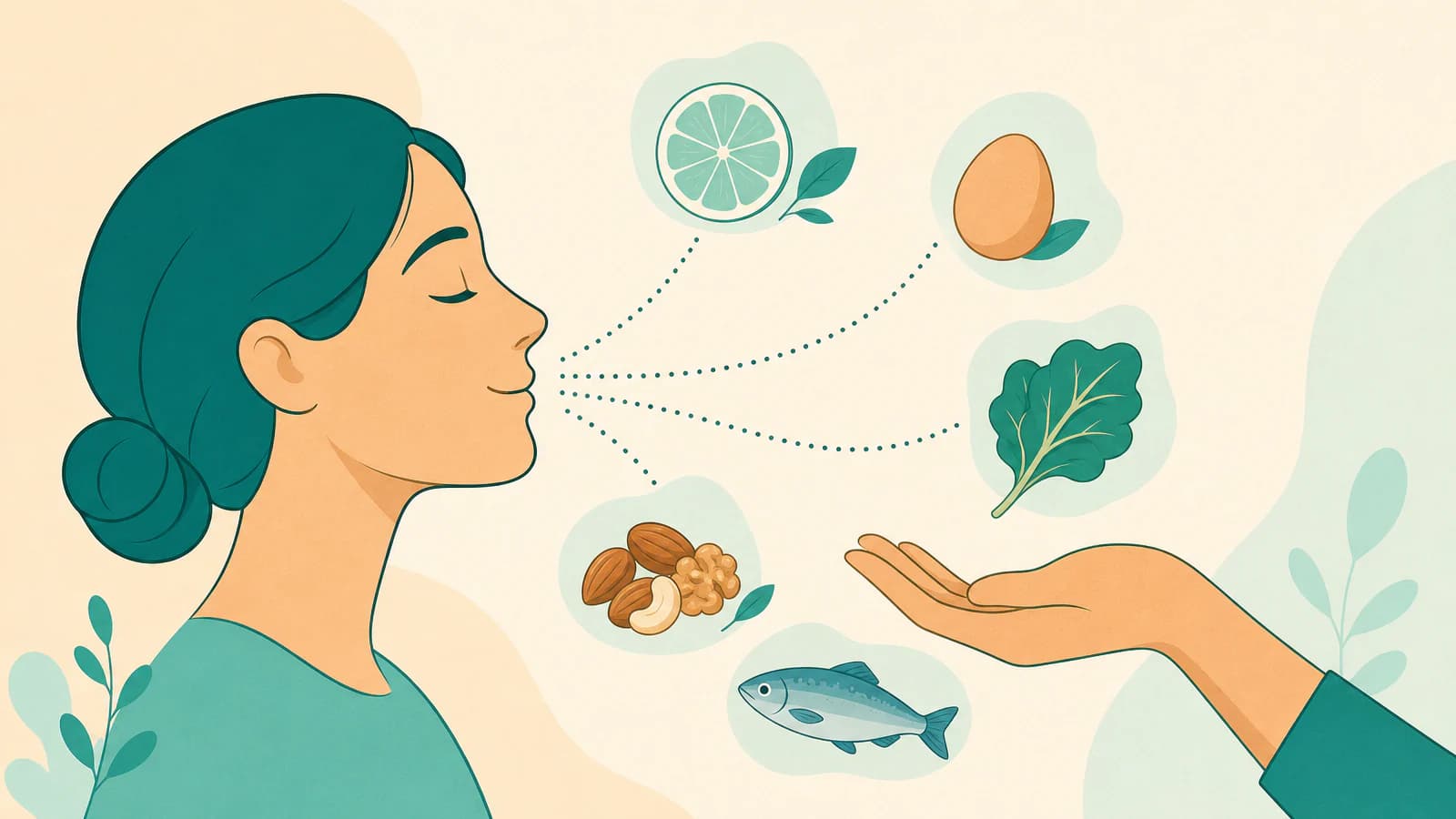
Sign to nutrient: the quick table
| What you see | Nutrient that may be low | More likely if | Ask your doctor about |
|---|---|---|---|
| A rash like a bad sunburn on sun-exposed skin, sometimes a band around the neck; diarrhea and confusion in late stages | Niacin (B3): pellagra | Alcohol use disorder, malabsorption | A nutrition review and niacin status |
| Tiny bleeding spots around hair follicles, corkscrew hairs, easy bruising, swollen or bleeding gums, slow healing | Vitamin C: scurvy | Very few fruits and vegetables, smoking, heavy drinking | A vitamin C level |
| Red, scaly or crusted patches around the mouth, nose and eyes, on the hands and feet or in the groin; slow wound healing; hair loss | Zinc | Malabsorption, liver or kidney disease, very restricted diets, weight-loss surgery | A zinc level |
| Darker patches on the skin, often over the knuckles; a smooth, sore tongue; tiredness | Vitamin B12 | Vegan diet, older age, metformin or acid reducers, weight-loss surgery | B12 and a complete blood count (CBC) |
| Pale skin, itching all over with no rash, brittle or spoon-shaped nails | Iron | Heavy periods, pregnancy, frequent blood donation, restricted diets | Ferritin and CBC |
| A scaly red rash around the eyes, nose and mouth; thinning hair | Biotin (rare) | Long-term antibiotics or anticonvulsants, IV nutrition, biotinidase deficiency, lots of raw egg white | A doctor's review, not a biotin megadose |
| Dry, scaly skin; poor wound healing | Essential fatty acids | IV nutrition without fat, severe fat malabsorption | A dietitian or specialist review |
| Rough, hard bumps around hair follicles; very dry skin; poor vision in dim light | Vitamin A | Malabsorption, weight-loss surgery | A vitamin A level |
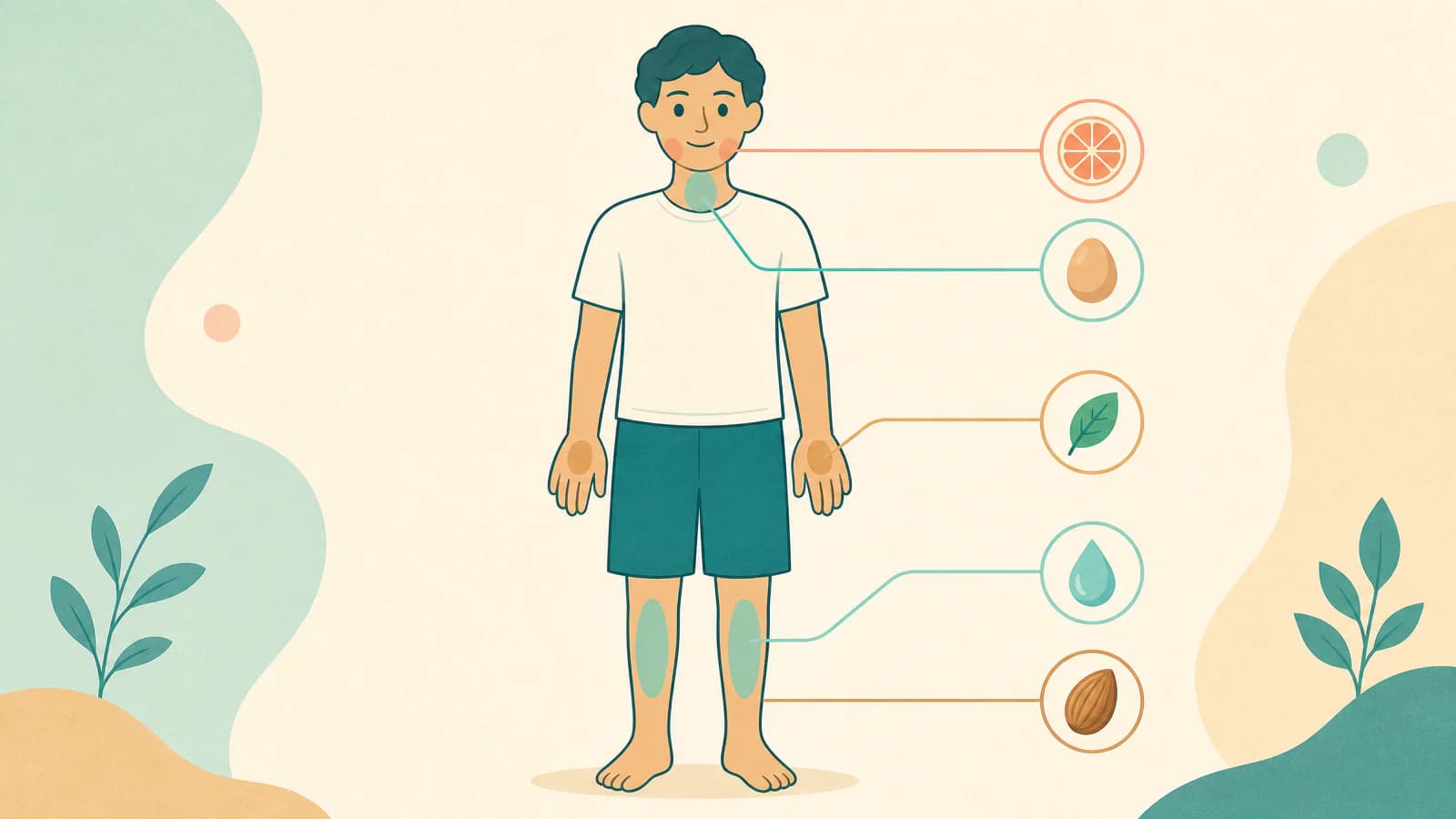
The signs in more detail
Niacin (B3): a sunburn-like rash that does not behave like sunburn
Pellagra is the disease of niacin deficiency. The rash appears on skin that sees the sun (face, neck, backs of the hands, forearms) and looks like a burn that darkens and peels. Late pellagra adds diarrhea and confusion. It has nearly disappeared in developed countries as a dietary problem, but specific groups remain at risk, especially people with alcohol use disorder or absorption problems.
Vitamin C: bleeding around the hairs and gums
Scurvy sounds historical, yet it still turns up in people who eat almost no fruit or vegetables. Look for pinpoint bleeding spots around hair follicles (often on the legs), hairs that coil like a corkscrew, bruises from light bumps, swollen bleeding gums and cuts that are slow to close. Smoking and heavy drinking raise the risk.
Zinc: a crusted rash around the mouth, hands and feet
Low zinc produces a red, scaly, sometimes crusted rash in a telltale pattern: around the openings of the face (mouth, nose, eyes), on the hands and feet, and in the groin. Wounds are slow to mend and hair can thin. An inherited form shows up in infants. In adults, the usual causes are malabsorption, liver or kidney disease, very restricted diets and weight-loss surgery.
Vitamin B12: darker skin, not paler
People expect B12 deficiency to cause tiredness. Fewer know that darkening of the skin is its most common skin sign, often on the hands and over the knuckles. A smooth, red, sore tongue and changes in hair and nails can come with it. Vegans, older adults, people on metformin or acid reducers, and anyone who has had weight-loss surgery are more likely to run low.
Iron: pale skin and an itch with no rash
Low iron can make skin look pale and, in some people, itch all over without any visible rash. Doctors check iron when generalized itch has no obvious cause. Nails can turn brittle or spoon-shaped. Heavy periods, pregnancy, frequent blood donation and restricted diets are the usual reasons.
Biotin: real, but rare
True biotin deficiency causes a scaly red rash around the eyes, nose and mouth and thinning hair. It is rare because biotin is in many foods and gut bacteria make some. The people at risk are a short list: long-term antibiotics or anticonvulsants, IV nutrition without biotin, an inherited enzyme problem (biotinidase deficiency) and diets heavy in raw egg white. If that is not you, a biotin megadose will not help your skin, and it can scramble blood tests. More in biotin for hair: does it work?
Essential fatty acids and vitamin A: special situations
Essential fatty acid deficiency causes dry, scaly skin and slow healing, but it is essentially limited to people on IV nutrition without fat or with severe fat malabsorption. Vitamin A deficiency causes rough, hard bumps around hair follicles (called phrynoderma), very dry skin and trouble seeing in dim light; in wealthy countries it is usually seen after weight-loss surgery or with malabsorption. Too much preformed vitamin A is also harmful: the adult upper limit is 3,000 mcg a day.
On a GLP-1 drug or after weight-loss surgery?
Eating much less raises the odds of a real gap. A 2025 joint advisory on GLP-1 nutrition lists the signs to watch: tiredness beyond what you would expect, excessive hair loss, flaky or itchy skin, poor wound healing and unusual bruising. If those fit, see supplements and labs for hair loss on GLP-1 for the tests to ask for.
Peeling fingertips: is it a vitamin deficiency?
Usually not. Peeling fingertips are one of the most searched "deficiency" signs, and one of the least likely to be one.
The common causes are everyday:
- Frequent hand washing and sanitizer strip the skin's oils.
- Wet work such as dishes, cleaning, hair washing or food prep.
- Hand eczema, which looks like dry, scaly, chapped or cracked skin and is easily mistaken for plain dryness. Even water can trigger it if your hands are often wet.
- Keratolysis exfoliativa, a harmless condition where small air-filled blisters appear on the palms (sometimes the soles) and then peel off in rings.
A deficiency is a rare cause, and when it is the cause there are other signs: a rash elsewhere, diarrhea, a sore tongue, slow healing.
What helps: gloves for wet work, a fragrance-free moisturizer after every hand wash, and a thicker ointment at night. See a dermatologist if the skin cracks, bleeds, blisters repeatedly or does not settle within a few weeks of this routine.
Your nails and tongue show it too
Skin is one window. Nails and tongue are two more, and they often change together. For nail clues such as spoon-shaped, pale or brittle nails, see what your nails really say about vitamin deficiency. A smooth, red, sore tongue is a classic sign of low B12 or iron; see what a red tongue means.
What to do if a sign fits
- Get tested before you supplement. Ask about ferritin and a CBC, B12, vitamin D and zinc, plus anything specific from the table above.
- Find the reason with your doctor. A deficiency is a clue, not the whole story: absorption, a medicine, alcohol or a very restricted diet usually sits behind it.
- Fill the gap at the right dose. Single nutrients at higher doses belong under your doctor's care, with a recheck date.
- If your diet is restricted, use a safety net. A basic multivitamin at about 100% of the Daily Value covers small gaps without megadoses.
Talk to your doctor before any supplement, especially if you are pregnant, breastfeeding, take other medicines, or have kidney or liver disease.
When it is not a vitamin
Most rashes around the mouth or on the hands have nothing to do with diet. Dermatitis, eczema, a reaction to a product, or an infection are far more common, and each needs a different fix. Not sure what you are looking at? Compare it with common rashes first.
 Rash around your mouth or on your hands? Add a photoAI describes what it sees, which common rashes it looks like, and when to see a doctor. It does not diagnose. One check is $4.99.Add a photo
See a doctor promptly if
- A rash comes with a fever or you feel unwell
- A rash spreads fast, blisters or the skin feels hot
- Your gums bleed and you bruise easily
- A rash comes with diarrhea, confusion or numbness
- A baby or young child has a crusted rash around the mouth and in the diaper area, or is not growing well
Frequently asked questions
What vitamin deficiency causes skin problems?+
The ones with recognizable skin signs are niacin (B3), vitamin C, zinc, vitamin B12, iron, biotin, vitamin A and essential fatty acids. They are uncommon in people who eat a varied diet and more likely with very low intake, absorption problems, heavy drinking or weight-loss surgery.
What deficiency causes a rash around the mouth?+
Zinc deficiency is the classic one: red, scaly or crusted patches around the mouth, often with patches on the hands and feet. Biotin deficiency can look similar but is rare. Most rashes around the mouth are not a deficiency at all, so have a doctor look at it.
Can low B12 cause dark spots on the skin?+
Yes. Darkening of the skin is the most common skin sign of B12 deficiency, often on the hands and over the knuckles, sometimes with a smooth, sore tongue and tiredness. A blood test confirms it.
Can iron deficiency cause itchy skin?+
It can. Iron deficiency is one of the internal causes doctors check when someone itches all over without a visible rash. Pale skin and brittle or spoon-shaped nails are other clues. Ask for ferritin and a blood count.
Are peeling fingertips a vitamin deficiency?+
Usually not. The common causes are frequent hand washing, sanitizer, wet work, hand eczema and keratolysis exfoliativa, a harmless peeling condition. A deficiency is a rare cause and comes with other signs, such as a rash elsewhere, diarrhea or a sore tongue.
What vitamin deficiency causes easy bruising?+
Vitamin C deficiency (scurvy) causes easy bruising, tiny bleeding spots around hair follicles and bleeding gums. It is rare and mostly seen with very restricted diets. Easy bruising has many other causes, including medicines, so see a doctor.
Should I take a multivitamin for my skin?+
Only as a safety net if your diet is restricted. A basic multivitamin at about 100% of the Daily Value is sensible then. It will not clear a rash that is not caused by a deficiency, and high single doses belong under a doctor's care after a blood test.
Related
- Supplements for skin, hair and nails: what the evidence says
- Nail signs of vitamin deficiency
- Supplements for acne: zinc, omega-3 and the evidence
- AI rash photo check
Sources
- Galimberti F, Mesinkovska NA. Skin findings associated with nutritional deficiencies. Cleveland Clinic Journal of Medicine. 2016. PubMed
- Gehrig KA, Dinulos JG. Acrodermatitis due to nutritional deficiency. Current Opinion in Pediatrics. 2010. PubMed
- Brescoll J, Daveluy S. A review of vitamin B12 in dermatology. American Journal of Clinical Dermatology. 2015. PubMed
- Redzic S, Hashmi MF, Gupta V. Niacin deficiency. StatPearls. 2023. PubMed
- Maxfield L, Daley SF, Crane JS. Vitamin C deficiency. StatPearls. 2023. PubMed
- Jagadeesan S, Kaliyadan F. Acrodermatitis enteropathica. StatPearls. 2023. PubMed
- Cervantes A, Daley SF. Biotin deficiency. StatPearls. 2025. PubMed
- Ravi U, Daley SF, Taylor C. Vitamin A deficiency. StatPearls. 2026. PubMed
- Saini S, Jain AK, Agarwal S, et al. Iron deficiency and pruritus: a cross-sectional analysis to assess its association and relationship. Indian Journal of Dermatology. 2021. PubMed
- Chang YY, van der Velden J, van der Wier G, et al. Keratolysis exfoliativa (dyshidrosis lamellosa sicca): a distinct peeling entity. British Journal of Dermatology. 2012. PubMed
- Mozaffarian D, Agarwal M, Aggarwal M, et al. Nutritional priorities to support GLP-1 therapy for obesity: a joint Advisory. American Journal of Clinical Nutrition. 2025. PubMed
- American Academy of Dermatology. Hand eczema. Accessed 2026. aad.org
- NIH Office of Dietary Supplements. Niacin, Vitamin C, Zinc, Vitamin B12, Iron, Biotin and Vitamin A fact sheets for health professionals. Accessed 2026. ods.od.nih.gov
This article is for general education and is not medical advice. It does not replace a consultation with a qualified clinician. If a symptom worries you, see a doctor.