Geographic tongue looks far more alarming than it is. It shows up as smooth red patches edged by slightly raised, pale borders, which together look like a map. The patches heal in one spot and appear in another, so the map seems to move over days or weeks. In almost everyone, it is completely harmless.
This page explains what it is, why it happens, and the rare reasons to mention it to a doctor. You can scan your tongue to track the patches over time.
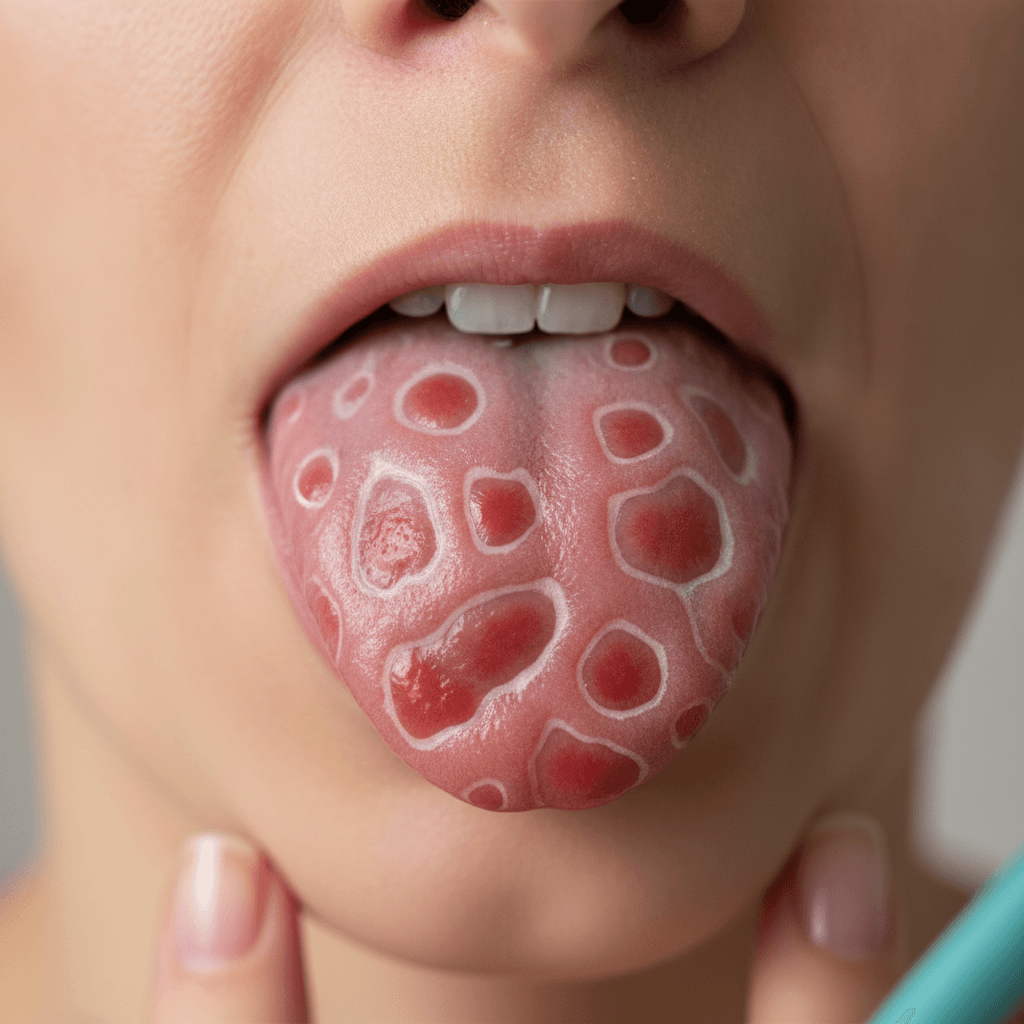
What geographic tongue is
The medical name is benign migratory glossitis. The red patches are areas where the tiny bumps on the tongue, the papillae, have temporarily smoothed away, which is why those spots look redder and shinier. The pale borders are where the papillae are bunched up at the edge of the patch. As one area recovers, another loses its papillae, so the pattern keeps shifting.
Why it happens
The honest answer is that no one knows the exact cause. A few links show up again and again:
- It runs in families, so genetics play a part
- Stress and hormonal changes can trigger flare-ups
- It is more common in people with psoriasis
- Some people notice it more when they are run down
It is not caused by poor hygiene, an infection, or anything you ate.
Is it dangerous
No. Geographic tongue is harmless, not contagious, and not a sign of oral cancer. The only real symptom for some people is mild sensitivity, a slight sting or burning with spicy, acidic, or very hot foods. Many people feel nothing at all and only notice it in the mirror.
Managing flare-ups
Since it clears on its own, treatment is usually about comfort:
- Ease off spicy, acidic, salty, or very hot foods during a flare
- Avoid strongly flavored or alcohol-based mouthwashes if they sting
- Manage stress, which can settle the frequency for some people
When to see a doctor
It is worth a visit if:
- A red patch stays in the same place and does not heal over a couple of weeks
- There is real pain rather than mild sensitivity
- You are not sure it is geographic tongue and want it confirmed
- A patch becomes a lump or sore that does not settle
Frequently asked questions
Is geographic tongue dangerous?+
No. It is harmless, not contagious, and not a sign of cancer. The main bother is occasional sensitivity to spicy or acidic foods.
What causes geographic tongue?+
The exact cause is unknown. It runs in families and is linked to stress, hormonal changes, and sometimes psoriasis. It is not caused by anything you did.
Does geographic tongue go away?+
The patches come and go and shift location over days or weeks. The tendency can last for years, but flare-ups usually settle on their own.
Related
Sources
- Cleveland Clinic, Tongue color
- Medical News Today, Tongue color: what does it say about health?
This article is for general education and is not medical advice. It does not replace a consultation with a qualified clinician. If a symptom worries you, see a doctor.