Tongue diagnosis is one of the oldest tools in traditional Chinese medicine, and it is having a moment online. Practitioners read the tongue to guide their advice, looking at its color, its coating, its shape, and which areas look different. It is worth understanding the framework, and it is just as worth being clear about what it is: a traditional model, not a substitute for modern medical care.
This page explains what TCM looks at, how the organ map works, and how to use that lens responsibly. You can also scan your tongue to track what you see over time.
What practitioners look at
A TCM tongue reading considers several features together:
- Body color. The color of the tongue itself, from pale to red to purple, is read as a sign of balance or imbalance.
- Coating. A thin film is seen as normal, while a thick or colored coating is read as a sign about digestion and what TCM calls dampness or heat.
- Shape and moisture. Swelling, teeth marks, cracks, and how wet or dry the tongue looks all feed the picture.
The organ map
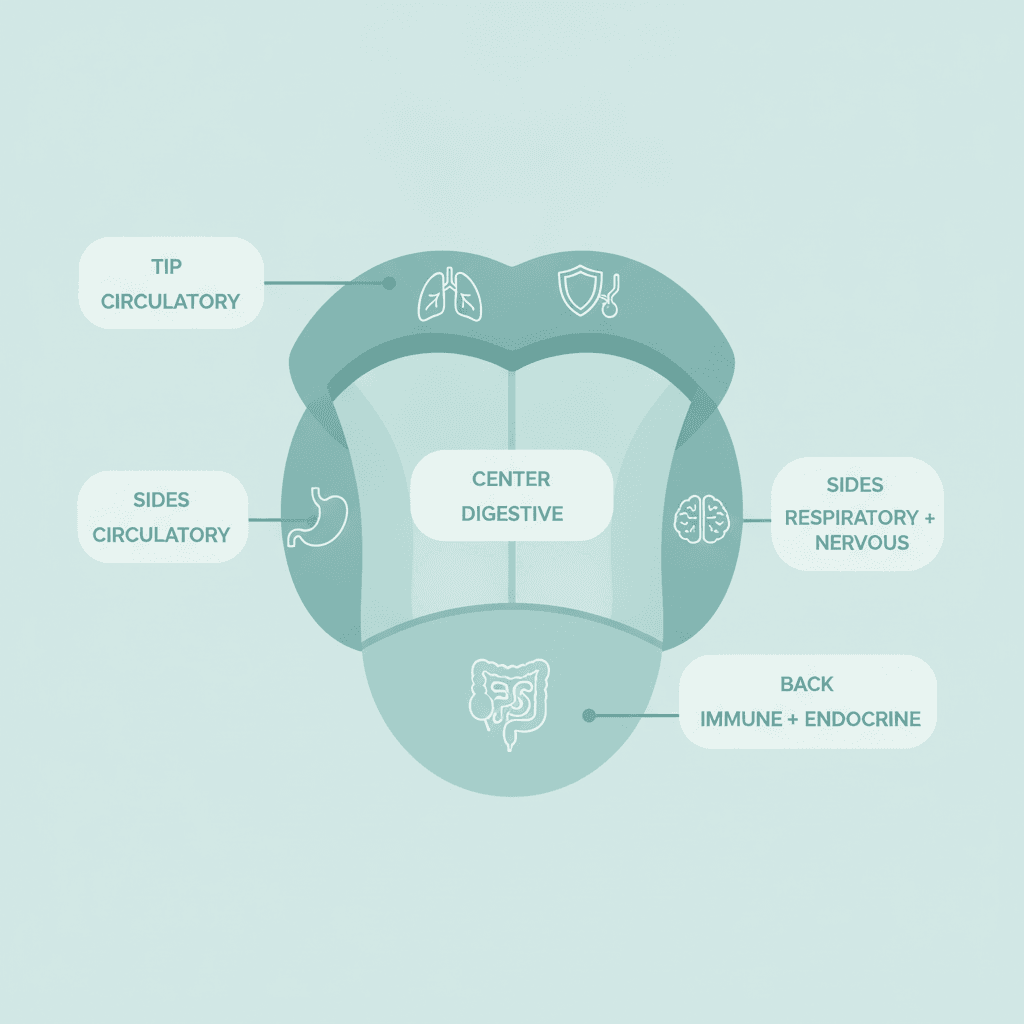
TCM divides the tongue into zones, each linked to an organ system:
- The tip is associated with the heart and lungs
- The sides relate to the liver and gallbladder
- The center maps to the spleen and stomach
- The back is linked to the kidney and bladder
A change concentrated in one zone is interpreted as relating to that system, and practitioners combine it with pulse and other signs before suggesting herbs or lifestyle changes.
The modern view
Here is the honest framing. Modern clinicians do look at the tongue, but for specific signs like thrush, deficiency, or dehydration, not to read organ health through zones. The TCM organ map is a traditional system that has not been validated by Western medical research. Interestingly, newer studies using cameras and software to analyze tongue color and coating have reported links to certain conditions, which has renewed scientific interest in the tongue as a signal, though that work is separate from classical zone mapping.
How to use it responsibly
Treat TCM tongue reading as a thoughtful lens for noticing change, not as a diagnosis. If you enjoy the framework, use it to prompt healthy habits like hydration, better oral care, and paying attention. What it should never do is replace a visit when something is persistent, painful, or will not wipe off.
When to see a professional
See a doctor or dentist if a tongue change lasts more than two weeks, a patch will not wipe off, or you have a sore, lump, pain, or numbness that does not settle.
Frequently asked questions
What does the tongue show in Chinese medicine?+
Practitioners read the tongue's body color, its coating, its shape and moisture, and map different zones to organ systems. It is used to guide lifestyle and herbal advice within that tradition.
Is tongue diagnosis scientifically proven?+
The TCM organ-mapping model is a traditional framework, not established Western medicine. Modern clinicians do look at the tongue, but for different signs. Treat TCM tongue reading as an interesting lens, not a medical diagnosis.
Can I read my own tongue?+
You can learn the basics, but it does not replace professional care. If a sign is persistent or worrying, see a doctor or dentist.
Related
Sources
- Cleveland Clinic, Tongue color
- Healthline, Tongue color: what is healthy, what is not
This article is for general education and is not medical advice. It does not replace a consultation with a qualified clinician. If a symptom worries you, see a doctor.