Seeing short broken pieces and frizz can look just like hair loss, but it is often the opposite problem. Breakage is damage to the hair you already have, while loss is hair leaving the follicle. They need completely different fixes, so telling them apart saves you from treating the wrong thing.
Here is a simple way to know which one you have. You can also track your hair over time.
- •Breakage snaps the hair somewhere along its length; hair loss releases the whole hair from the root.
- •Check the end: a tiny white bulb means it shed from the root (loss); a blunt, frayed end with no bulb means breakage.
- •Breakage comes with split ends, frizz and short broken pieces, and is fixed with gentler heat, chemicals and styling, not hair-loss treatment.
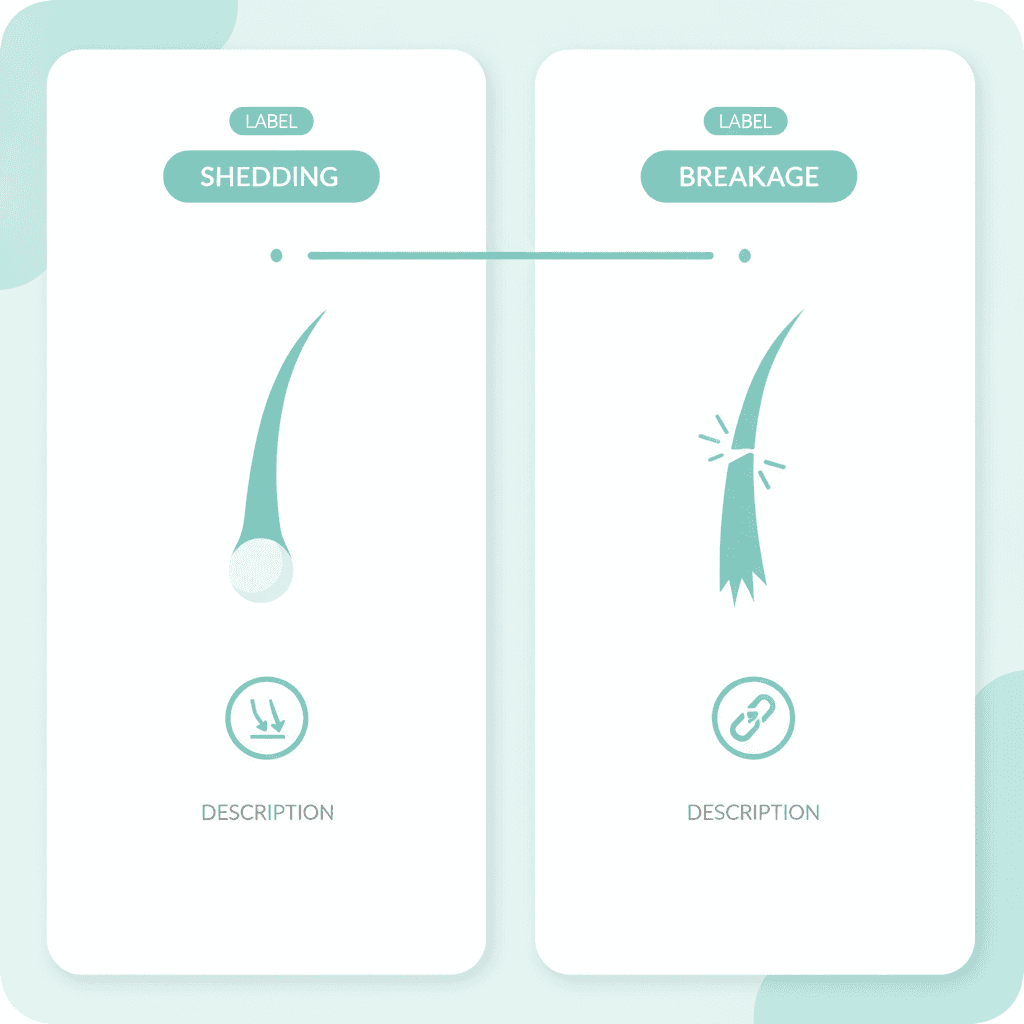
The difference in one sentence
Breakage snaps the hair somewhere along its length. Loss releases the whole hair, root and all, from the follicle. One is a problem with the shaft, the other with the follicle.
The bulb test
Pick up a fallen hair and look closely at the end that was attached:
- A small, soft white bulb at the root means the hair completed its cycle and shed naturally. That is shedding or loss.
- A blunt, dry, or frayed end with no bulb means the hair snapped partway along. That is breakage.
Other signs of breakage
Breakage tends to travel with clues you can see and feel:
- Lots of short, uneven pieces, especially around the crown and where you tie your hair
- Split ends and frizz
- Hair that feels dry, rough, or straw-like
- Little white dots along strands, which are weak points about to break
What causes it
Breakage is almost always about wear and tear on the shaft: frequent heat styling, bleach, relaxers and other chemicals, tight ponytails and braids, rough towel-drying and brushing, and plain dryness. The follicle is fine, so the fix is gentler handling, not a hair-loss treatment.
How to reduce breakage
- Turn down the heat and use a heat protectant
- Space out bleach, dye, and relaxers
- Swap tight styles for looser ones, and silk or satin over cotton at night
- Detangle gently from the ends up, on damp not soaking hair
- Keep the hair conditioned and trimmed to remove split ends
When to see a doctor
Breakage rarely needs a doctor, but check in if you also see real shedding from the root, a thinning pattern, or an itchy, sore, or flaky scalp, which point to something beyond damage.
Frequently asked questions
How do I know if my hair is breaking or falling out?+
Look at the end of the strand. A small white bulb means it shed from the root, which is loss. A blunt or frayed end with no bulb means it snapped, which is breakage.
What causes hair breakage?+
Heat styling, bleach and relaxers, tight ponytails and braids, rough brushing, and dryness all weaken the shaft until it snaps. It is a hair-care problem, not a follicle one.
Can broken hair grow back?+
Yes. The follicle is fine, so once you ease the damage the hair grows normally. The broken pieces just need to grow out.
Related
Sources
- American Academy of Dermatology, hair damage and breakage
- Healthline, hair breakage resources
This article is for general education and is not medical advice. It does not replace a consultation with a qualified clinician. If a symptom worries you, see a doctor.