A dark line running up a nail looks alarming, but most of the time it is harmless. The medical name is melanonychia, and it simply means a band of pigment in the nail. In many people, especially those with darker skin tones, these bands are common and completely normal. The important part is learning which features separate the everyday kind from the rare case that needs attention.
This page explains what causes these lines, the warning pattern dermatologists watch for, and exactly when to book a visit. If you have a band you want to keep an eye on, you can photograph it in the app and track whether it changes, though a photo log is for monitoring, not diagnosis.

What melanonychia is
Melanonychia is a stripe of brown or black pigment produced by color-making cells in the nail matrix. The band grows out with the nail, so it usually runs in a straight line from the base to the tip. It can be a single line or several, thin or wide, on one nail or many.
Common, harmless causes
Most dark nail lines are benign. The usual reasons include:
- Natural pigmentation, which is common and normal in people with darker skin and often appears on several nails
- Injury to the nail, which can trigger a pigment band as it heals
- Certain medications, including some chemotherapy and antimalarial drugs
- A benign mole or freckle in the nail matrix
When several nails carry similar bands and nothing is changing, that pattern leans strongly toward harmless.
The warning pattern
A small number of dark bands are an early sign of melanoma under the nail, and catching that early matters. Dermatologists use a checklist sometimes called the ABCDEF of nail melanoma.
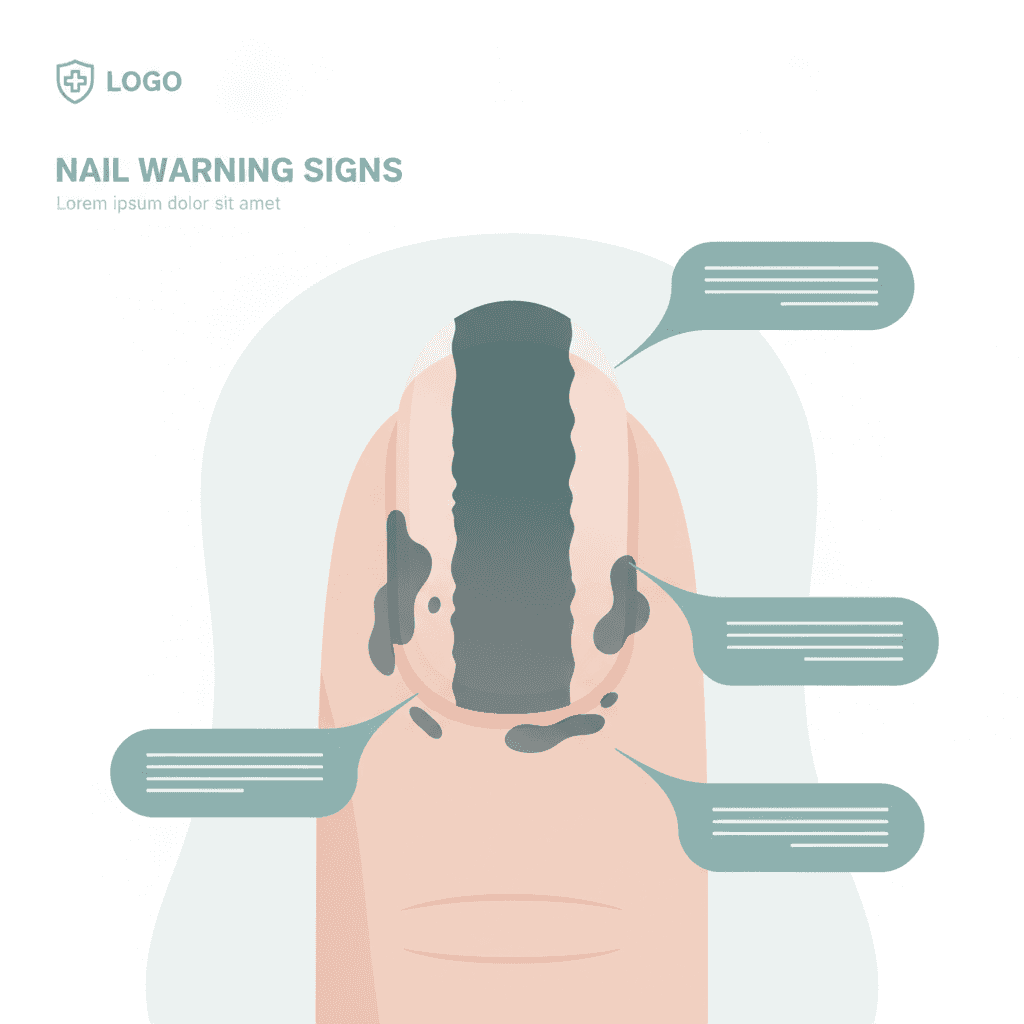
- A. Age and ethnicity: a new band appearing in adulthood, particularly from the 40s onward
- B. Band: brown to black, wider than about 3 mm, with blurred or uneven edges
- C. Change: a band that keeps getting wider or darker over weeks and months
- D. Digit: a single finger or thumb rather than several nails, with the thumb, index, and big toe most relevant
- E. Extension: pigment spreading onto the skin of the cuticle or fingertip, known as the Hutchinson sign
- F. Family or personal history of melanoma
One of these does not mean cancer, but it does mean a dermatologist should take a look rather than waiting.
What to do
Try not to panic, since the math is on your side. Then act on the pattern. If your band is on one digit, is new in adult life, is widening, or is creeping onto the surrounding skin, book a dermatologist. Bring a photo from a few weeks ago if you have one, because the rate of change is one of the most useful things a specialist can assess. A dermatologist may simply examine it, or may take a small sample to be certain.
When to see a doctor
Make a dermatology appointment if the line is:
- New in adulthood and on a single finger, thumb, or toe
- Getting wider, darker, or more irregular over time
- Spreading pigment onto the skin around the nail
- Paired with nail splitting, a lump, or bleeding at the base
Frequently asked questions
Is a dark line on my nail skin cancer?+
Usually not. Most dark nail lines are harmless, especially when you have darker skin or several nails are involved. The concern is a single new band that widens, so when in doubt, see a dermatologist.
What does melanonychia look like when it is dangerous?+
Warning features include a single finger or thumb, a band that gets wider over time, blurred or irregular edges, more than one color, and pigment spreading onto the skin around the nail.
Should I see a doctor for a black line on my nail?+
Yes if it is new in adulthood, on one digit, widening, or spreading to the skin. A quick dermatologist visit can rule out anything serious.
Related
Sources
- American Academy of Dermatology, What to look for: ABCDEs of melanoma
- Cleveland Clinic, Nails and your health
This article is for general education and is not medical advice. It does not replace a consultation with a qualified clinician. If a symptom worries you, see a doctor.