If your nails have turned yellow, the odds are strongly in your favor. The two most common causes are a fungal infection and simple staining from dark nail polish or smoking. A health condition behind the color is possible, but it is the rare case rather than the usual one.
This page walks through the everyday causes, how to tell staining from fungus, and the signs that move yellow nails from cosmetic to medical. You can also scan your nails in 60 seconds to track whether the color is growing out or spreading.

The common causes
Most yellow nails trace back to one of these:
- A fungal infection, which often starts at the tip or side and slowly spreads
- Staining from frequent dark or red polish worn without a base coat
- Tobacco smoke, which can tint both nails and fingertips
- Age, since nails naturally yellow and thicken over the decades
None of these is an emergency. Fungus is the one most likely to need treatment, because it tends to progress if left alone.
The rarer causes
Sometimes the color points further. Yellow nail syndrome is an uncommon condition that links yellow, slow-growing nails with lung issues and swelling in the limbs. Thyroid disease, diabetes, and psoriasis can also change nail color and texture. These are worth knowing about, but they usually arrive with other symptoms rather than yellow nails alone.
How to tell staining from fungus
This is the practical question, and a few clues separate the two.
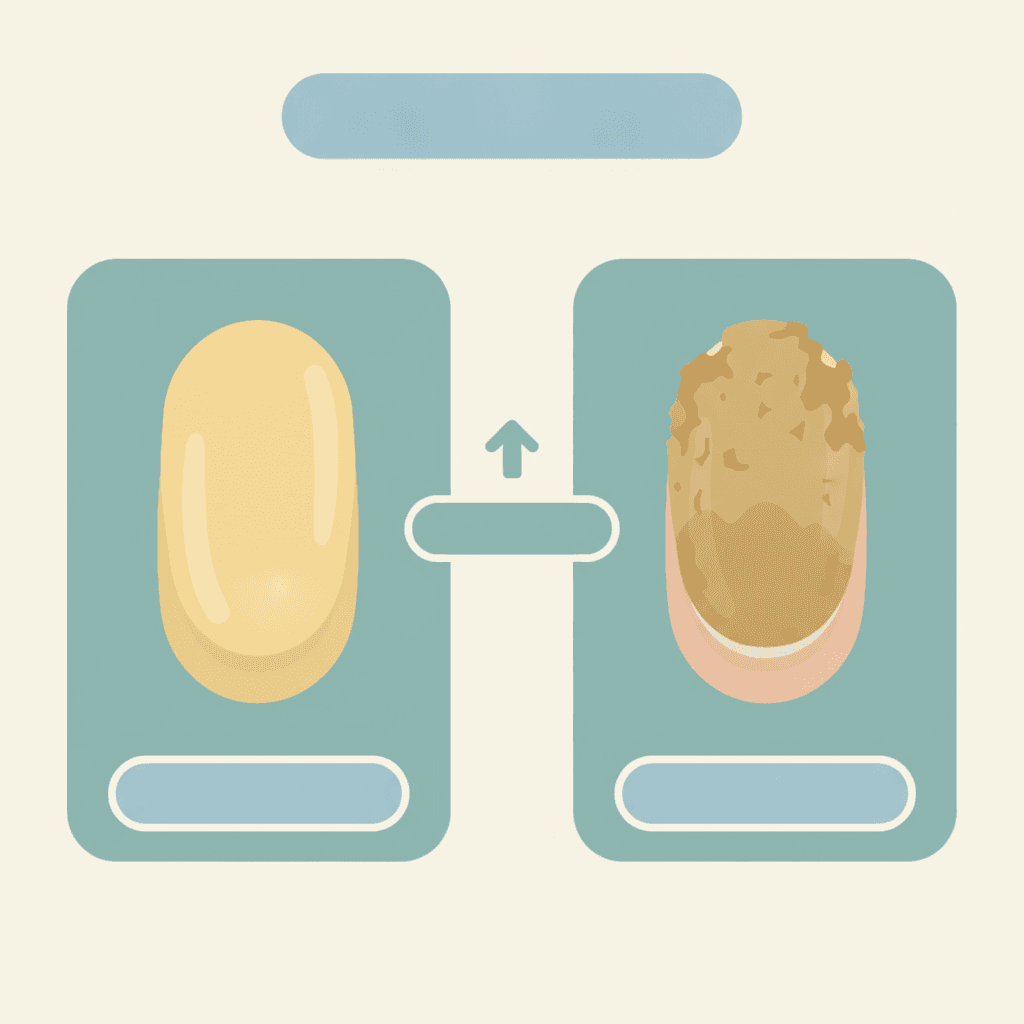
Staining is usually even, sits on the surface, and affects the nails you paint most. It grows out cleanly once you stop. Fungus tends to be uneven, starts at one corner, and brings changes in texture: the nail thickens, turns brittle or crumbly, and can lift away from the bed. If the nail itself is changing shape, think fungus rather than polish.
What helps
For staining, the fix is straightforward. Give the polish a rest, always use a clear base coat, and let the stained section grow out. A gentle buff and a squeeze of lemon are popular home tricks, though patience does most of the work.
For fungus, over-the-counter options are limited, and a stubborn infection often needs a prescription antifungal. It clears slowly, sometimes over six to twelve months, because you are waiting for a clean nail to grow in. A doctor can confirm it is fungus before you commit to months of treatment.
When to see a doctor
Check in with a clinician if you notice:
- Thickening, crumbling, or a nail lifting off its bed
- Yellowing that keeps spreading despite stopping polish and smoking
- Yellow nails together with swelling in the hands, feet, or legs
- Color changes alongside breathing problems or a known thyroid issue
Frequently asked questions
Why are my nails yellow?+
The two most common reasons are a fungal infection and staining from dark polish or smoking. Less often, yellowing points to a health condition affecting the lungs, thyroid, or circulation.
How do I get rid of yellow nails?+
If it is staining, it grows out once you stop the cause and use a base coat. If it is fungus, you usually need an antifungal treatment, which can take months to clear.
Are yellow nails serious?+
Most are not. Yellowing that comes with thick, crumbling, lifting nails, or with swelling and breathing problems, should be checked by a doctor.
Related
Sources
- Cleveland Clinic, Nails and your health
- Mayo Clinic, 7 fingernail problems not to ignore
This article is for general education and is not medical advice. It does not replace a consultation with a qualified clinician. If a symptom worries you, see a doctor.