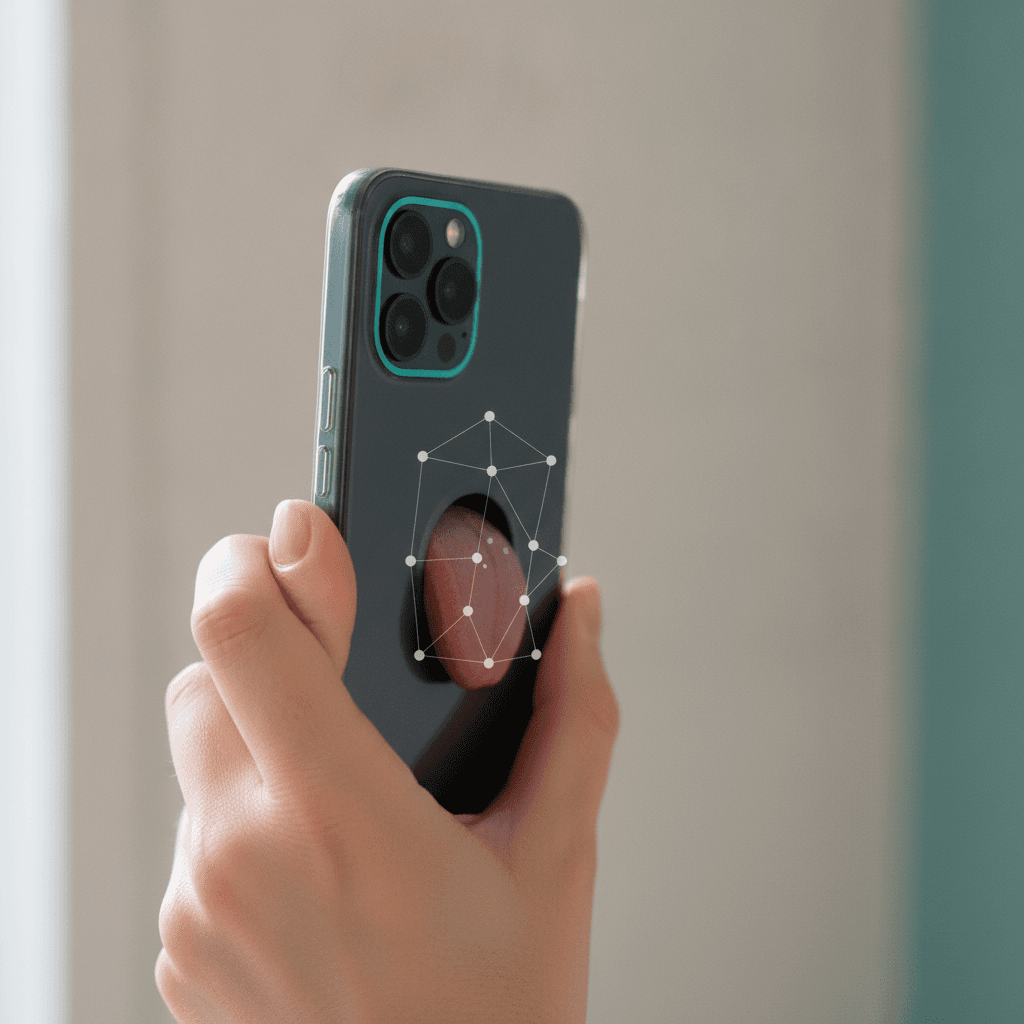
The idea that a camera and some software can read your health from your tongue sounds like a stretch, yet it is one of the more interesting threads in digital health right now. Researchers have built systems that photograph the tongue and analyze its color and coating, and several studies report striking accuracy at flagging certain conditions. Here is what that science actually shows, what it cannot do, and how a tongue self-check fits in.
Curious what your own tongue looks like to an AI? Try a scan in 60 seconds.
Why the tongue is a useful signal
The tongue is unusually convenient to study. It is visible, it needs no needle or lab, and its surface reflects hydration, oral hygiene, and the balance of bacteria in the mouth. Its color and coating shift with the body's state, which is exactly why both modern clinicians and traditional practitioners have always glanced at it. A camera simply measures those shifts more consistently than the human eye.
What the research shows
Recent work has paired tongue photographs with machine learning, and the results have drawn attention. In some studies, software analyzing tongue color and texture identified the condition a patient had with accuracy reported in the high ranges, and coverage in outlets like Scientific American and others highlighted figures around the high nineties for specific tasks. Researchers have described detecting signals linked to conditions such as diabetes and anemia from tongue images.
Two caveats keep this honest. These results come from controlled studies on selected groups, and real-world accuracy depends on lighting, camera quality, and the specific condition. A headline number is a promising research signal, not a guarantee for any one person.
What AI tongue analysis can and cannot do
It helps to be precise about the line here.
It can read color, coating, and texture consistently, track changes over time, surface patterns you might miss, and point you toward care when something looks worth checking.
It cannot diagnose a disease, replace an examination, or act as a medical device unless it has been cleared as one. A confident-looking score is still an educational signal, not a verdict.
How a tongue self-check fits in
Used well, an AI tongue scan is a wellness habit. It gives you a clear read, keeps a photo log so you can see whether something is changing, and nudges you to see a dentist or doctor when a sign crosses into the territory that matters, like a patch that will not wipe off. It complements the way you might already read tongue color or explore the traditional tongue map, without pretending to be a clinic.
When to see a professional
No scan, human or AI, replaces care for a warning sign. See a dentist or doctor for a sore or patch that lasts more than two weeks, a lump, or ongoing pain, and seek emergency care for a sudden blue tongue with breathing trouble.
Frequently asked questions
Can AI really tell health from your tongue?+
Research is promising. Studies that photograph the tongue and analyze color and coating with machine learning have reported high accuracy at flagging certain conditions. It is a research signal, not a finished medical test.
How accurate is AI tongue analysis?+
Some studies have reported accuracy in the high ranges for specific conditions in controlled settings. Real-world accuracy depends on lighting, camera, and the condition, so treat headline numbers with care.
Is an AI tongue scan a diagnosis?+
No. It is a wellness and awareness tool that helps you notice and track changes. It does not diagnose disease and does not replace a clinician.
Related
Sources
- Scientific American, This AI spots disease by reading your tongue's color
- New Atlas, The AI doc will see your tongue now
This article is for general education and is not medical advice. It does not replace a consultation with a qualified clinician. If a symptom worries you, see a doctor.