A red, itchy spot where you injected, and you are wondering whether it is normal or something to worry about tonight.
Here is the sort in under a minute: what needs emergency care, what needs a doctor today, and what is a normal reaction that will fade. Then the numbers from the FDA labels, lumps and bruises, and what helps.
Quick answer: A mild red, itchy, sore or bruised spot at the injection site is the usual reaction and tends to fade. Swelling of the face, lips, tongue or throat, or trouble breathing, means emergency care. Redness that keeps spreading, hot, swollen, painful skin, pus or a fever means a doctor the same day. Anything about the medicine itself is a conversation for the prescriber.
Looking at the spot and not sure which group it falls in? Add a close-up and a wider photo of the site, and the photo check describes what it sees. It is a description, not a diagnosis.
 Reaction where you inject your GLP-1? Tap to add a photoAI describes what it sees and whether it looks like a common reaction or something to show a doctor, and you get a care and rotation plan as a PDF. It does not diagnose. One check is $4.99.Add a photo
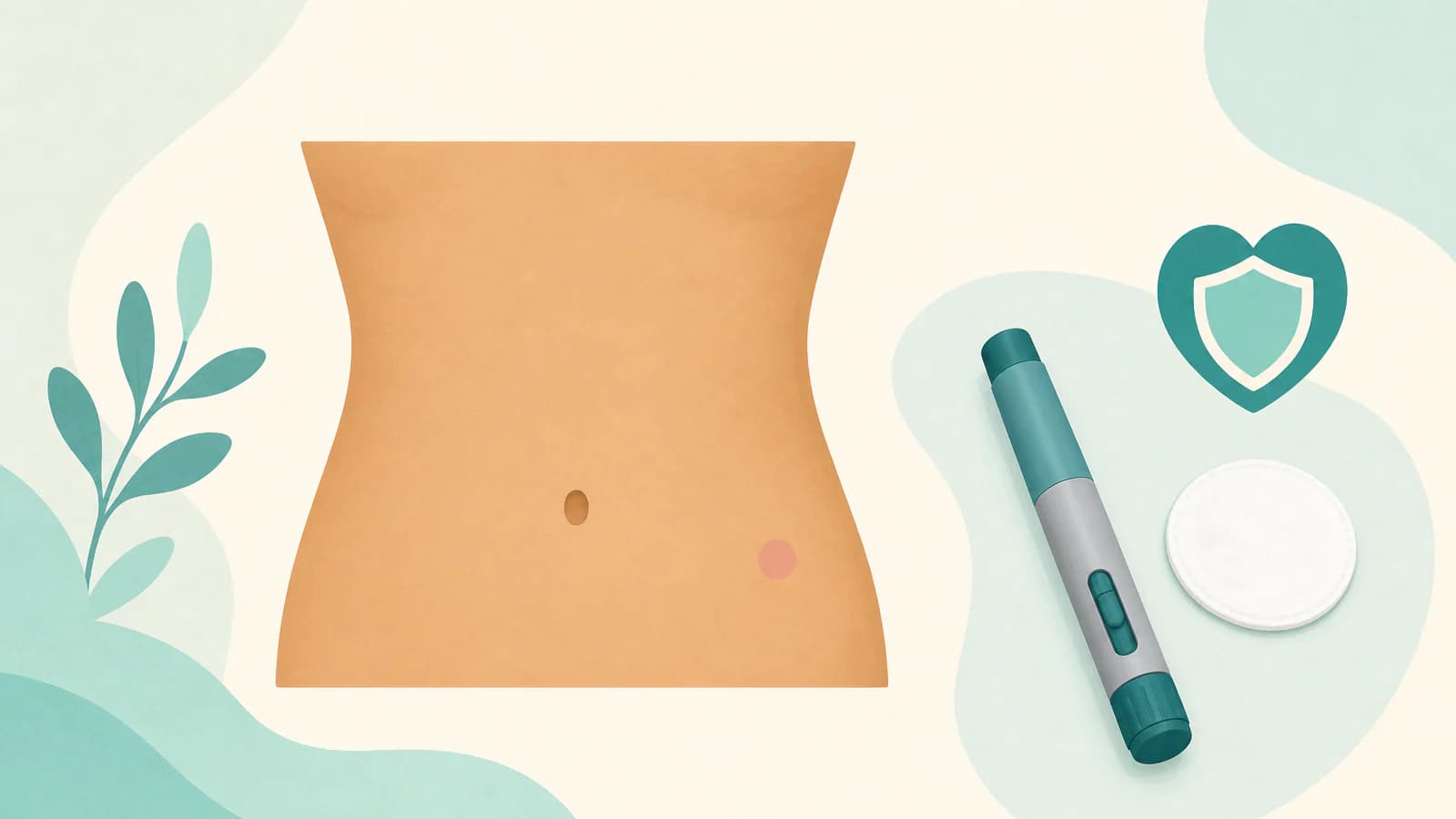
Get help first: when an injection site reaction is not normal
- Emergency (call 911 or go to the ER): swelling of the face, lips, tongue or throat, trouble breathing or swallowing, fainting or feeling dizzy, a very rapid heartbeat, or a severe rash or itching. These are the serious allergic reaction signs listed in the Medication Guides for all four medicines, which say to get medical help right away. Tell the emergency team which medicine you use.
- Same-day doctor (call the prescriber, an urgent care clinic or a nurse line today): redness that keeps spreading, skin that is hot, swollen and painful, pus or oozing, blisters, a fever or feeling unwell, or a hard, painful lump that is growing. The NHS describes cellulitis, a skin infection, as skin that is painful, hot and swollen. It usually looks red, though that is less obvious on brown and Black skin, and early treatment with antibiotics can stop it getting more serious. Go to the ER instead if you also have a very high temperature, a fast heartbeat or fast breathing, dizziness, confusion, or cold, clammy or pale skin.
- Soon (tell the prescriber this week): a reaction that is not improving with time, comes back with every injection, or leaves a lump, pit or thickened patch. The American Academy of Dermatology (AAD) says to ask the prescriber for injection tips if irritation does not improve.
What a normal injection site reaction looks like
A normal reaction is mild: a little redness, itch, soreness or burning, a small raised or bruised spot, sometimes a firm patch. The FDA labels and the studies describe it with words like discomfort, redness, itching, swelling, bruising, rash and induration, which means firmness.
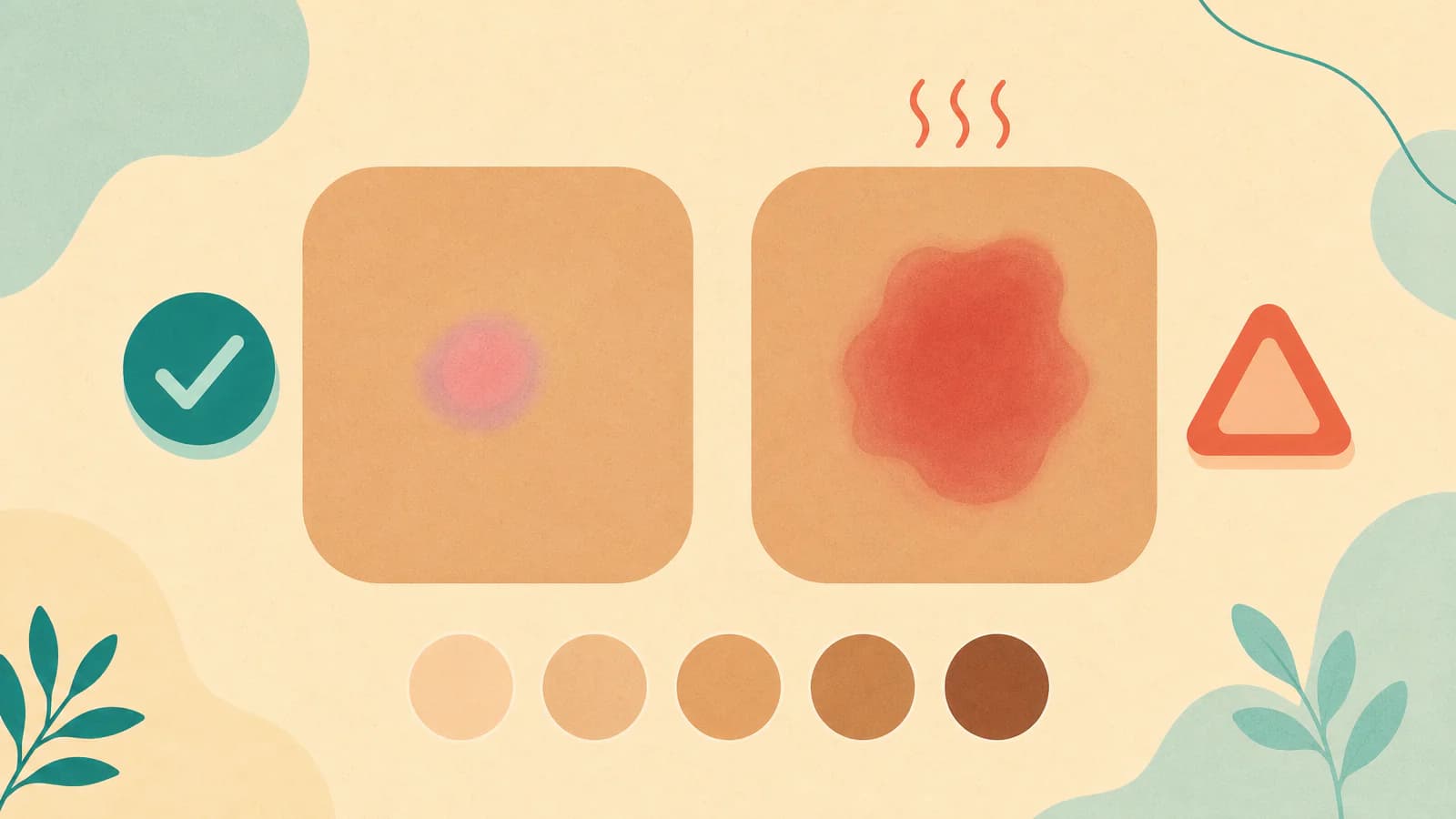
Color depends on skin tone. On light skin the spot is often pink or red. On brown and Black skin the same reaction can look darker brown, purple or gray, or barely different, so feel for warmth and swelling too.
Direction of travel matters more than the first look. A normal reaction stays small and fades. A worrying one grows and heats up. We do not show clinical photos of real patients here. The illustration shows the shapes, and the photo check can describe your own photo.
How common are injection site reactions on each medicine?
| Medicine | Active ingredient | What the FDA label reports |
|---|---|---|
| Ozempic | semaglutide | In placebo-controlled trials, injection site reactions (for example discomfort and redness) were reported in 0.2% of people on Ozempic. |
| Wegovy | semaglutide | In weight-loss trials in adults, 1.4% on Wegovy and 1% on placebo had injection site reactions (itching, redness, inflammation, firmness, irritation). |
| Mounjaro | tirzepatide | In pooled placebo-controlled trials, 3.2% on Mounjaro versus 0.4% on placebo. Across seven trials, 4.6% of people who developed antibodies to tirzepatide had one, versus 0.7% of those who did not. |
| Zepbound | tirzepatide | In its two pooled weight-loss trials, 6%, 8% and 8% across three dose groups versus 2% on placebo. With antibodies to tirzepatide, 11.3%, versus 1% without. |
These come from different trials, populations and definitions. Do not use the table to decide which medicine is gentler.
Two points are worth knowing. More people who developed antibodies to tirzepatide reported injection site reactions, though a 2024 analysis of Lilly's phase 3 trials found most were mild to moderate and that antibodies had no effect on how well the medicine worked. And a 2026 review of trial, case and safety-report data reached the same conclusion: most reactions are mild to moderate and are managed with symptom relief.
Lump, bruise or itch at the injection site
Lump. Small firm bumps and nodules are described in reviews and case reports. A lump that is hard, painful, hot or growing needs a doctor. The tirzepatide Instructions for Use say to rotate within your chosen area to lower the risk of pits or thickened skin (lipodystrophy) and lumpy skin (localized cutaneous amyloidosis), and not to inject where skin has pits, is thickened or has lumps. International injection guidelines written for insulin make a similar point about fatty lumps under the skin: do not inject into them, and rotate sites to help prevent them.
Bruise. A small bruise is among the commonly reported reactions. The Zepbound label lists injection site bruising among its terms. The usual reason is a tiny blood vessel under the skin getting nicked. Avoid injecting into skin that is already bruised.
Itch. Itch with redness at the site is common. If it spreads beyond the spot, see the next section.
Rash somewhere else, not at the injection site
A rash or hives away from the injection spot can be an allergic-type reaction rather than a local one. The Zepbound label says most hypersensitivity reactions in its trials were skin reactions such as rash and itching. Ozempic and Wegovy list rash and hives among reports after approval.
Tell the prescriber about any new rash. Go straight to emergency care if the lips, face or tongue swell or breathing gets hard. More in rash on GLP-1 medicines and our skin rash guide.
What helps, and what to avoid
- Do not scratch or pick. Keep the spot clean.
- Ask a pharmacist what is safe to put on it. Talk to a doctor or pharmacist before putting anything on the area, especially in pregnancy, while breastfeeding, on other medicines, or with kidney or liver disease.
- Do not inject into skin that is tender, bruised, red or hard, or into scars, stretch marks, pits or lumps. That is what the Wegovy and tirzepatide Instructions for Use say.
- Rotate. The Medication Guides say to change the injection site with each injection and not to use the same site every time. You may use the same area of the body, in a different spot. See injection site rotation: diagram and tips.
- Follow the Instructions for Use that come with your pen. The steps differ by product.
- If it is not improving, or keeps coming back, ask the prescriber for injection tips, as the AAD advises.
Decisions about the medicine itself, including whether to keep using it, belong to the prescriber.
Why do injection site reactions happen?
Mostly local irritation from the needle and the injection. Sometimes the immune system is involved: the labels and Lilly's trial data show more reactions in people who develop antibodies to tirzepatide. Nobody can tell from one photo or one day which it is, which is why the direction the spot takes over the next days is the better clue.
If you want a second look at a spot right now, upload a photo and compare what the photo check describes with the three groups above.
Reaction where you inject your GLP-1? Tap to add a photoAI describes what it sees and whether it looks like a common reaction or something to show a doctor, and you get a care and rotation plan as a PDF. It does not diagnose. One check is $4.99.Add a photo
Related guides
- Injection site rotation: diagram and tips, for a pattern that keeps skin healthy.
- Rash on GLP-1 medicines, if the rash is not at the injection site.
- Skin rash guide and the rash checker, for rashes in general.
- GLP-1 side effects on skin, hair and face, for everything else people notice.
Frequently asked questions
Is it normal to have a red, itchy bump after an Ozempic injection?+
A mild red, itchy or sore spot is the usual reaction and tends to fade. The Ozempic label lists discomfort and redness among the reported reactions. If the spot grows, feels hot or becomes more painful, see a doctor.
Mounjaro injection site red and itchy: when should I worry?+
Get emergency care for swelling of the face, lips, tongue or throat, trouble breathing, or a severe rash all over. See a doctor the same day if the redness keeps spreading, the skin is hot, swollen and painful, or you have pus or a fever. A small red, itchy spot that stays small and fades is commonly reported.
How long does an injection site reaction last?+
There is no single number, but a mild reaction should be fading from one day to the next, not growing. The American Academy of Dermatology says that if irritation does not improve with time, you should ask the prescriber for injection tips.
Why does my injection site burn or hurt?+
Stinging or soreness right after an injection is a reported reaction and usually local irritation. See a doctor the same day if the pain builds, the skin turns hot and swollen, or a hard, painful lump grows. If it happens with every injection, tell the prescriber.
Is a lump at the injection site normal?+
Small firm bumps and nodules are described in reviews and case reports for these medicines. A lump that is hard, painful, hot or growing needs a doctor. The tirzepatide Instructions for Use say not to inject into skin that has lumps, pits or thickening.
Can I get a rash that is not at the injection site?+
Yes. A rash or hives away from the injection spot can be an allergic-type reaction rather than a local one. Tell the prescriber, and go straight to emergency care for swelling of the lips, face or tongue, or trouble breathing.
Is a bruise at the injection site a problem?+
A small bruise is among the commonly reported reactions, and hitting a tiny blood vessel is the usual reason. The labels say not to inject into skin that is already bruised, so choose a fresh spot next time.
Should I change where I inject if a spot reacts?+
The Medication Guides say to change the injection site with each injection and not to use the same site every time. You may use the same area of the body but a different spot in it. The prescriber or a pharmacist can help you choose sites.
Sources
- Novo Nordisk. Ozempic (semaglutide) injection prescribing information and Medication Guide. DailyMed, label revised June 2026. DailyMed
- Novo Nordisk. Wegovy (semaglutide) injection prescribing information, Medication Guide and Instructions for Use. DailyMed, label revised June 2026. DailyMed
- Eli Lilly and Company. Mounjaro (tirzepatide) prescribing information, Medication Guide and Instructions for Use. DailyMed, label revised September 2026. DailyMed
- Eli Lilly and Company. Zepbound (tirzepatide) prescribing information, Medication Guide and Instructions for Use. DailyMed, label revised September 2026. DailyMed
- Elgindi D, Petronic-Rosic V. Glucagon-like peptide-1 receptor agonist-associated injection site and dermatologic reactions. Clinics in Dermatology. 2026. PubMed 42692277
- Mullins GR, Hodsdon ME, Li YG, et al. Tirzepatide immunogenicity on pharmacokinetics, efficacy, and safety: analysis of data from phase 3 studies. Journal of Clinical Endocrinology and Metabolism. 2024. PubMed 37700637
- Hearn EB, Sherman JJ. Injection-site nodules associated with once-weekly subcutaneous administration of semaglutide. Diabetes Spectrum. 2021. PubMed 33627997
- Frid AH, Kreugel G, Grassi G, et al. New insulin delivery recommendations. Mayo Clinic Proceedings. 2016. PubMed 27594187
- American Academy of Dermatology. How can GLP-1 drugs affect my skin, hair, and nails? Updated February 2026. aad.org
- National Health Service (UK). Cellulitis. nhs.uk, accessed October 2026. nhs.uk
This article is for general education and is not medical advice. It does not replace a consultation with a qualified clinician. If a symptom worries you, see a doctor.