A patch of itchy red blotches, or hives that came up a few days after your last injection. Is it the medicine, and is it dangerous?
Here is the sort in under a minute: what needs 911, what needs a doctor today, and what can wait. Then the numbers from the FDA labels, hives, itching and what to do tonight.
Quick answer: A rash on a GLP-1 medicine can be an allergic-type reaction, a local irritation, or have nothing to do with the medicine. The FDA labels report hypersensitivity reactions, and the Zepbound label says most of those in its trials were skin reactions such as rash and itching. Most skin reactions are mild. Swelling of the face, lips, tongue or throat, trouble breathing, or blisters and sores in the mouth, eyes or genitals need emergency care. Anything about the medicine itself is a decision for the prescriber.
Looking at the rash and not sure which group it falls in? Add a photo, and the photo check describes what it sees and how soon a doctor should see it. It is a description, not a diagnosis.
 Tap to add a photo of the rashAI describes what it sees, which common rashes it looks like and when to see a doctor, and you get a skin care plan as a PDF. It does not diagnose. One check is $4.99.Add a photo
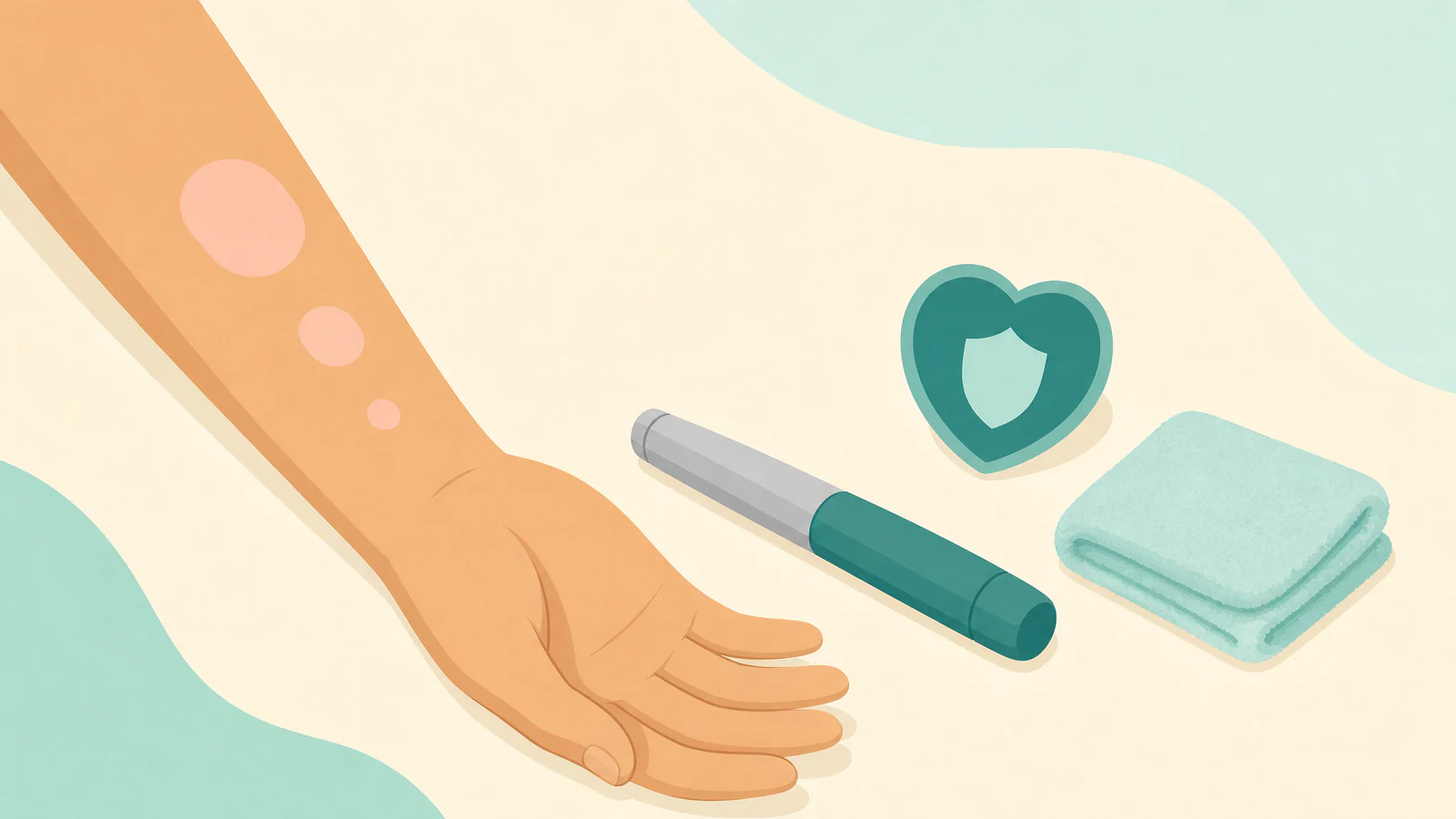
Get help first: when a rash on a GLP-1 medicine is an emergency
- Emergency (call 911 or go to the ER): swelling of the face, lips, tongue or throat, trouble breathing or swallowing, feeling faint or dizzy, a very rapid heartbeat, or a severe rash or itching. These are the serious allergic reaction signs listed in the Medication Guides of all four medicines, which say to get medical help right away. Blisters, peeling or sores in the mouth, eyes or genitals also need the ER, and so does a rash that does not fade when you press a clear glass against it, especially with a fever. Tell the emergency team which medicine you use.
- Same-day doctor (call the prescriber, an urgent care clinic or a nurse line today): a rash or hives that keep spreading, a rash with a fever or feeling unwell, skin that is hot, swollen and painful, or hives with swelling under the skin (angioedema). The NHS tells people with hives plus swelling under the skin to get an urgent appointment. If the rash is on your face, check your lips, eyelids and tongue for swelling.
- Soon (tell the prescriber this week): hives that have not improved after 2 days or keep coming back (NHS), a rash that is not fading, or any new rash you cannot explain. Hives that last 6 weeks or longer are called chronic, and the American Academy of Dermatology (AAD) says a board-certified dermatologist can treat them.
What a rash on a GLP-1 medicine can look like
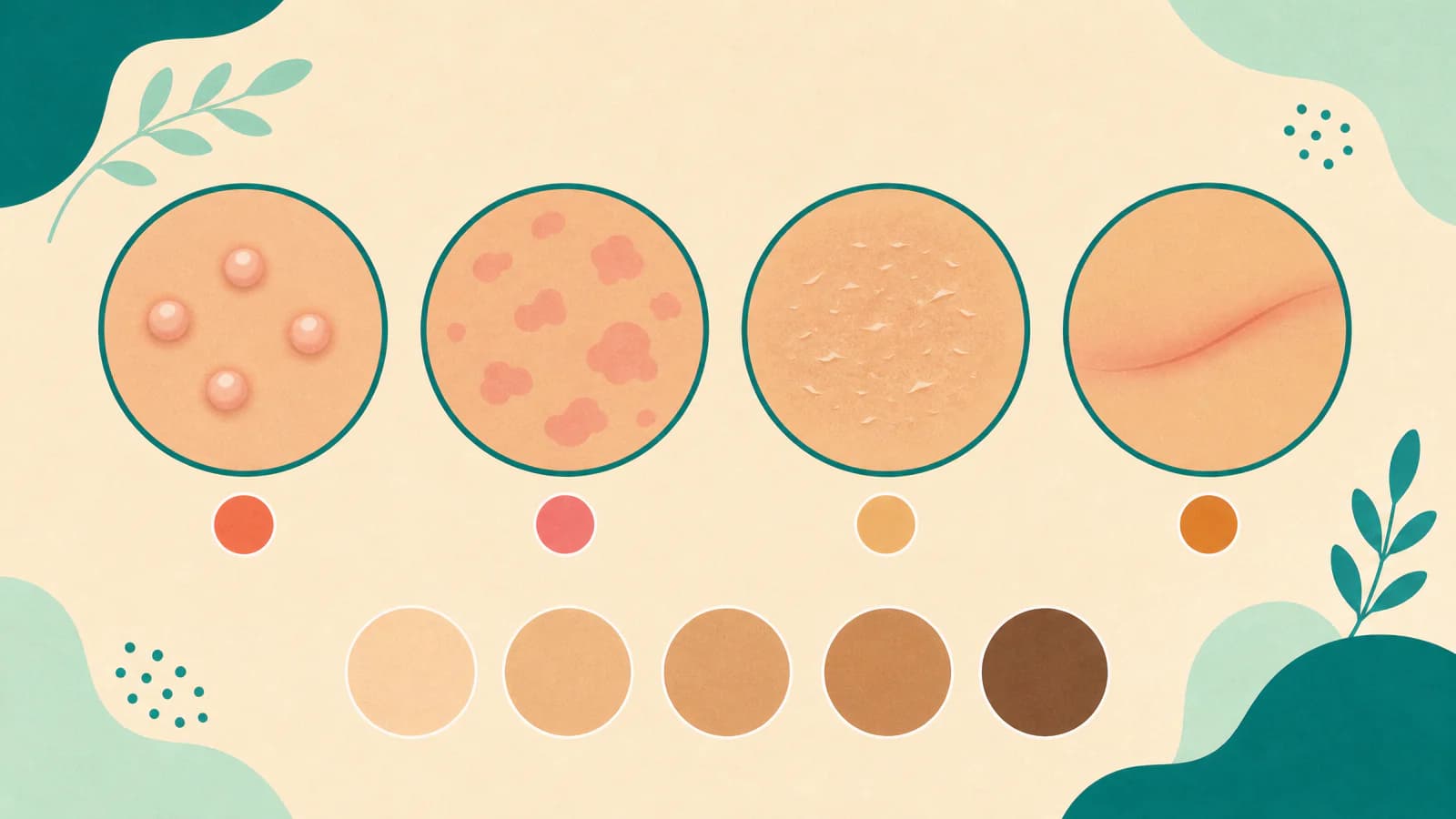
There is no single GLP-1 rash. People and papers describe a handful of patterns:
- Hives. Raised, intensely itchy welts or patches that can appear anywhere. One hive tends to fade within 24 hours, but new ones can appear (AAD).
- Blotchy pink or red spots over the trunk or limbs. Doctors call some drug-related ones morbilliform eruptions, and a 2024 review of published case reports lists them among rare reactions to GLP-1 medicines.
- Dry, red, itchy, eczema-like patches. The Mounjaro label gives urticaria and eczema as examples of sometimes severe hypersensitivity reactions.
- Sore, itchy or damp skin in folds. After a lot of weight loss, the AAD notes loose skin that folds on itself and causes rashes where skin touches skin.
- Tender lumps under the skin. Rare. A 2026 case report described tender lumps on the trunk and limbs four weeks after semaglutide was started, which doctors tied to a specific skin condition after tests. A lump that stays or hurts needs a doctor.
The NHS says hives look pink or red on white skin, and the colour can be harder to see on brown and Black skin. On darker skin the same reaction can look darker brown, purple or gray, or barely different, so go by raised texture, warmth and swelling too.
We do not show clinical photos of real patients here. The illustration shows the usual shapes, and the NHS hives page has a photo gallery across skin tones. The photo check can describe your own photo.
How common is a rash on each medicine? What the FDA labels say
| Medicine | Active ingredient | What the FDA label reports |
|---|---|---|
| Zepbound | tirzepatide | Two pooled weight-loss trials: immediate hypersensitivity reactions (within a day of an injection) in 2.1% of people on the drug versus 0.4% on placebo, and non-immediate ones in 3.5% versus 2.7%. Most were skin reactions (for example rash, itching). Severe ones: 0.1% versus none. Listed among its most common adverse reactions. |
| Mounjaro | tirzepatide | Pooled placebo-controlled trials in adults: hypersensitivity reactions in 3.2% of people on the drug versus 1.7% on placebo, sometimes severe (for example urticaria and eczema). Anaphylaxis and angioedema are reported. |
| Wegovy | semaglutide | Rash and urticaria are listed among reports after approval. In its adolescent trial (ages 12 and older), 3% on the drug had a rash and 3% had hives, versus 0% on placebo. Anaphylaxis and angioedema are reported. |
| Ozempic | semaglutide | Anaphylaxis, angioedema, rash and urticaria are listed among reports after approval. |
These rows come from different trials with different definitions. They are not a ranking of the medicines. Reports after approval come from an unknown number of people, so the labels say they cannot give a rate.
One pattern repeats across the tirzepatide labels. On Zepbound, hypersensitivity reactions were more frequent in people who developed antibodies to tirzepatide (6.2%) than in those who did not (3%). On Mounjaro, across seven trials, the figures were 4.1% versus 3.0%.
A 2026 review of FDA adverse event reports found that skin and injection site reactions were about 31% of 442,567 GLP-1 reports, the third most frequent category, and that most were mild to moderate (Elgindi and Petronic-Rosic). A share of reports is not a rate.
Rash not at the injection site
A rash or hives away from the injection spot is more likely a body-wide, allergic-type reaction than a local one. The labels group these as hypersensitivity. It does not have to start right after a shot: the Zepbound label counts both immediate reactions (within a day of an injection) and non-immediate ones.
Where it shows up (legs, arms, face, neck, chest, stomach or all over) does not tell the cause by itself. What matters is how fast it spreads, whether anything swells, whether you have a fever, and how you are breathing. Tell the prescriber about any new rash.
If the rash is right where you used the pen, read injection site reactions instead. Serious allergic reactions are documented, for example a 2026 case report titled "Anaphylaxis to Tirzepatide Confirmed by Positive Skin Prick Testing", but they are not common.
Hives on GLP-1 medicines
Hives are a skin reaction that makes bumps, raised patches, or both appear suddenly, and they often itch intensely. The AAD says most cases are temporary and go away without treatment. One hive tends to fade within 24 hours, new ones can appear, and a case usually lasts a few days to a few weeks.
Hives can come from an allergy (food, an insect bite, a medication), an infection, or something touching the skin such as sunlight, pressure or cold. The NHS adds heat, sweat and scratching. Many people never find the cause.
On the labels, Ozempic and Wegovy list urticaria, the medical word for hives, among reports after approval. Mounjaro gives urticaria as an example of its hypersensitivity reactions, and Zepbound says most of its hypersensitivity reactions were skin reactions such as rash and itching.
A pharmacist can advise on antihistamine treatment for hives (NHS). Tell them which medicines you take. For look-alikes, see hives vs bug bites and heat rash vs hives.
Itching on a GLP-1 medicine, with or without a rash
Itch has several sources. The AAD lists dry skin from hormone changes and from eating and drinking less. You can also itch where skin folds rub together after weight loss, around the injection spot, or just before hives appear.
Severe rash or itching is on the Medication Guides' list of serious allergic reaction signs, so itch with swelling or trouble breathing is an emergency.
For everyday itch, the AAD suggests a gentle cleanser, a moisturizer with ceramides applied while the skin is still damp, a humidifier, and plenty of fluids. Keep skin folds clean and dry.
It might not be the medicine
Plenty of rashes have nothing to do with a pen. Heat and sweat (the AAD lists excessive sweating among reports), rubbing in skin folds, a new soap, detergent or skin product, another medicine or supplement you started around the same time, a virus, eczema and bites all cause them. The timeline usually decides.
For clues, see the skin rash guide, heat rash vs hives, hives vs bug bites, eczema vs ringworm and scabies vs eczema.
What to do about a rash on a GLP-1 medicine today
- Check the emergency list above first.
- Write down the timeline: the date you started the medicine, the date of any change in your treatment, the day the rash began, and anything else new (medicines, supplements, products, foods).
- Photograph the rash once a day in the same light.
- Leave the skin alone. Do not scratch, keep it clean, and ask a pharmacist before putting anything on it. Tell them which medicines you take. Talk to a doctor or pharmacist first, especially in pregnancy, while breastfeeding, on other medicines, or with kidney or liver disease.
- Tell the prescriber, with the timeline and photos.
- See a board-certified dermatologist if it lasts or keeps coming back.
Treatment depends on what the rash is, so there is no single cream or pill to name here. Decisions about the medicine itself, including whether to keep using it, belong to the prescriber. Do not change anything on your own.
Want a second look at the rash before you call? Add a photo and compare what the photo check describes with the three groups above.
Tap to add a photo of the rashAI describes what it sees, which common rashes it looks like and when to see a doctor, and you get a skin care plan as a PDF. It does not diagnose. One check is $4.99.Add a photo
Related guides
- Injection site reactions, for a reaction right where you inject.
- Skin sensitivity and burning on GLP-1 medicines, when skin hurts but there is nothing to see.
- Hair loss on GLP-1 medicines, for the other change people notice most.
- Skin rash guide and the rash checker, for rashes in general.
- GLP-1 side effects on skin, hair and face, for everything else people notice.
Frequently asked questions
Does Ozempic cause a rash?+
It can be linked to one. The Ozempic label lists rash and urticaria (hives) among reports after approval. Those reports come from a population of unknown size, so the label says a frequency cannot be reliably estimated. Any new rash is worth telling the prescriber about.
Mounjaro rash not at the injection site: is it an allergy?+
A rash away from the injection spot is more likely a body-wide reaction than a local one. The Mounjaro label groups these as hypersensitivity reactions, reported in 3.2% of people on the drug versus 1.7% on placebo, and gives urticaria and eczema as examples of sometimes severe ones. Tell the prescriber, and go to emergency care for swelling of the face, lips or tongue or trouble breathing.
Can Zepbound cause hives?+
The Zepbound label says most hypersensitivity reactions in its trials were skin reactions such as rash and itching, and it reports anaphylaxis and angioedema after approval. A pharmacist can advise on antihistamines for hives, and the prescriber should hear about it too.
Is a rash all over my body an emergency?+
Not always, but a widespread rash that keeps spreading, or comes with a fever or feeling unwell, needs a doctor the same day. Swelling of the face, lips, tongue or throat, trouble breathing, fainting or a severe rash or itching mean 911 or the ER.
Can a GLP-1 rash show up weeks after starting?+
It can. A reaction does not have to start right after a shot: the Zepbound label counts immediate reactions (within a day of an injection) and non-immediate ones. The label gives no timing in weeks, so write down the date you started and the date the rash began and give both to the prescriber.
Why am I itchy on Wegovy or Ozempic with no rash?+
Dry skin is one source: the American Academy of Dermatology lists dry skin from hormone changes and from eating and drinking less. Itch can also come from skin folds after weight loss, from the injection spot, or be the first sign of hives. Severe itching with swelling or trouble breathing is an emergency.
What helps a rash on a GLP-1 medicine?+
It depends on what the rash is. A pharmacist can advise on antihistamines for hives, and a board-certified dermatologist can treat rashes that last or keep returning. Whether to keep using the medicine is the prescriber's decision, so do not change anything on your own.
How long does a GLP-1 rash last?+
The labels give no duration. For hives in general, the American Academy of Dermatology says one hive tends to fade within 24 hours, new ones can appear, and a case usually lasts a few days to a few weeks. See a doctor if it is not improving after 2 days.
Sources
- Eli Lilly and Company. Zepbound (tirzepatide) prescribing information and Medication Guide. DailyMed, label revised September 2026. DailyMed
- Eli Lilly and Company. Mounjaro (tirzepatide) prescribing information and Medication Guide. DailyMed, label revised September 2026. DailyMed
- Novo Nordisk. Wegovy (semaglutide) injection prescribing information and Medication Guide. DailyMed, label revised June 2026. DailyMed
- Novo Nordisk. Ozempic (semaglutide) injection prescribing information and Medication Guide. DailyMed, label revised June 2026. DailyMed
- Elgindi D, Petronic-Rosic V. Glucagon-like peptide-1 receptor agonist-associated injection site and dermatologic reactions. Clinics in Dermatology. 2026. PubMed 42692277
- Salazar CE, Patil MK, Aihie O, et al. Rare cutaneous adverse reactions associated with GLP-1 agonists: a review of the published literature. Archives of Dermatological Research. 2024. PubMed 38795152
- Carson L, Eisner M, Launay C, et al. Novel cutaneous adverse effects of the increasingly prevalent glucagon-like peptide 1 agonists. Skin Health and Disease. 2026. PubMed 42813201
- Steele C, Crisp H. Anaphylaxis to tirzepatide confirmed by positive skin prick testing. Annals of Allergy, Asthma and Immunology. 2026. PubMed 42735799
- American Academy of Dermatology. Hives: FAQs. Accessed October 2026. aad.org
- American Academy of Dermatology. How can GLP-1 drugs affect my skin, hair, and nails? Updated February 2026. aad.org
- National Health Service (UK). Hives. nhs.uk, accessed October 2026. nhs.uk
- National Health Service (UK). Anaphylaxis. nhs.uk, accessed October 2026. nhs.uk
This article is for general education and is not medical advice. It does not replace a consultation with a qualified clinician. If a symptom worries you, see a doctor.