You woke up with itchy bumps, or they appeared out of nowhere in the afternoon, and now you are checking your sheets and your diet at the same time. Hives or bug bites?
This page shows what each one tends to look like, a pen test that settles a lot of cases in a few hours, what helps, and the symptoms that mean skip the guide and get help.
Quick answer: Hives are raised, itchy welts that appear suddenly, change shape, and fade within about a day while new ones pop up somewhere else. Bug bites are bumps that stay where they landed for days, often with a tiny dot or blister in the middle, usually on skin that was uncovered. Welts that move around lean hives. Bumps that stay put lean bites. Swelling of the lips, tongue or throat with hives is an emergency.
Woke up covered in itchy bumps and can't tell hives from bites? Add a photo and the AI photo check compares the size, spacing and shape of the bumps with both descriptions.
 Still not sure? Hives or bug bites?Tap to add a photo of the rash on your armAI describes what it sees, which common rashes it looks like, and when to see a doctor. It does not diagnose. One check is $4.99.Add a photo
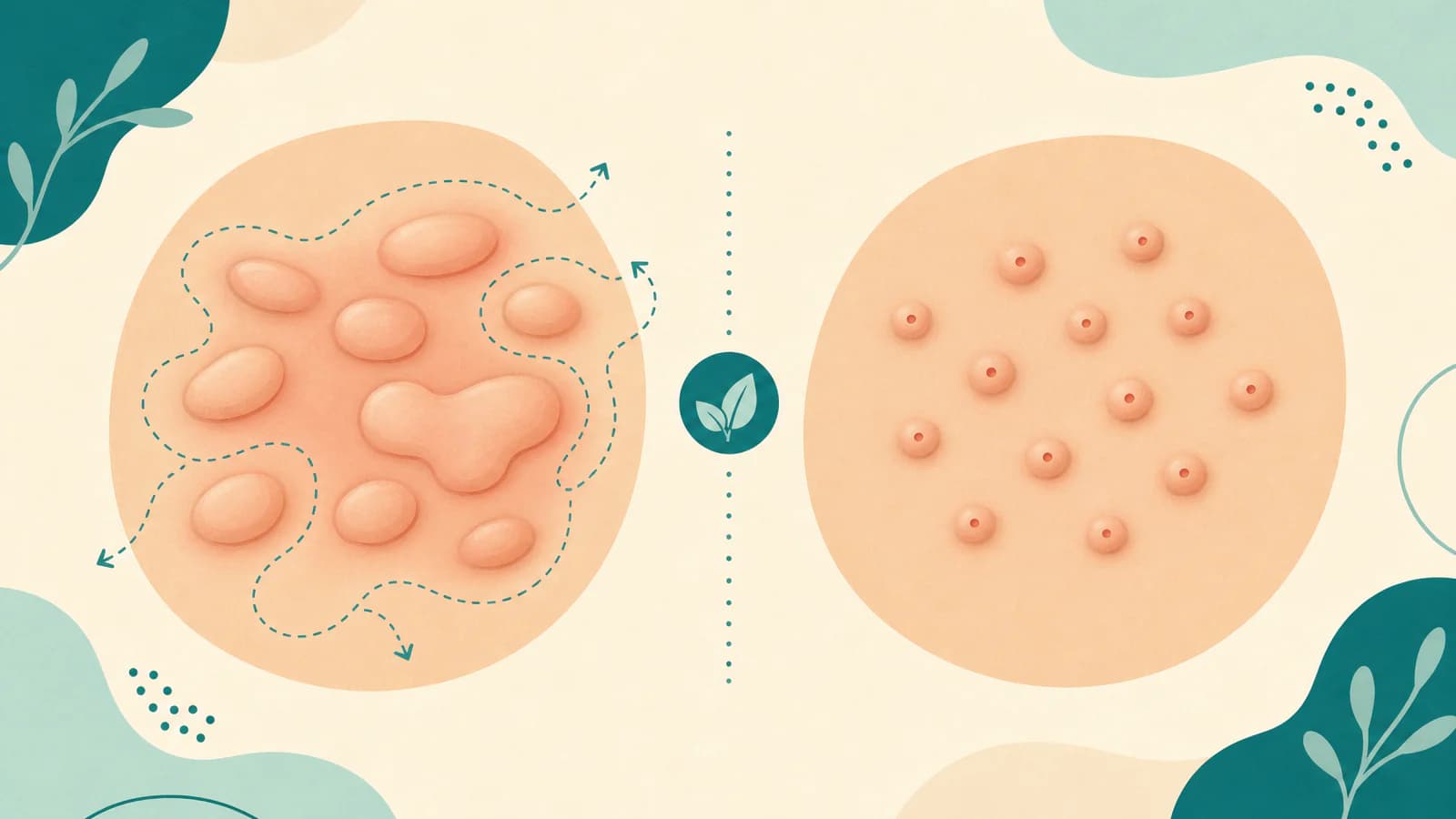
Hives vs bug bites at a glance
| Hives | Bug bites | |
|---|---|---|
| Looks like | Raised, itchy welts of varying size that can merge into larger patches. Pink or red on light skin, skin-toned or slightly darker on brown and Black skin | Raised bumps, often with a tiny central dot or small blister, similar in size |
| Where on the body | Anywhere, often several areas at once | Exposed skin, or where clothing is tight. Often grouped or in short lines |
| Itch or pain | Intense itch, sometimes stinging or burning | Itch, sometimes sore. Large local swelling is possible |
| Pattern and spread | Appear fast, move around, each welt gone within about a day | Appear within hours of the bite and stay for days |
| Contagious? | No | The bites are not. Fleas and bed bugs can spread through a home |
| Typical trigger | Foods, medicines, viral infections, heat, pressure, stress, sometimes none found | Mosquitoes, fleas, bed bugs, mites, other insects |
| What usually helps | Non-sedating antihistamine, cool compress, avoiding the trigger | Wash, cold compress, short hydrocortisone or calamine, antihistamine for night itch |
Not sure whether yours count as welts or bites? Circle a few with a pen, look again in a few hours, and add a photo so the check can compare them with both columns.
Still not sure? Hives or bug bites?Tap to add a photo of the rash on your armAI describes what it sees, which common rashes it looks like, and when to see a doctor. It does not diagnose. One check is $4.99.Add a photo
What hives look like
Hives, or urticaria, are raised welts that can look like mosquito bites at first glance but behave very differently. They range from small spots to patches the size of a hand, and neighboring welts often merge. On light skin they look pink or red. On brown and Black skin they can be skin-toned or a little darker or lighter, so run a fingertip over the area and feel for raised patches.
The signature trait is that they do not stay. Each welt usually fades within about a day without leaving a mark, while new ones appear in other places, so the rash seems to travel. Press one and it often turns paler for a moment.
They can show up anywhere, in several places at once. Some people also get deeper swelling of the lips, eyelids, hands or face.
Common triggers include foods, medicines (antibiotics and anti-inflammatory painkillers among them), viral infections, heat, pressure, cold, exercise and stress. Often no trigger is ever found. Hives that clear within six weeks are called acute. Hives that keep coming back for longer than six weeks are called chronic. They are not contagious.
What bug bites look like
Bites are raised bumps that tend to hold still. Many have a tiny puncture dot in the center or a small blister on top. They usually land on exposed skin, in clusters or short lines, and they stay for days rather than hours.
The insect changes the pattern. Mosquito bites are puffy welts that appear within minutes and fade over a few days. Flea bites cluster around the ankles and lower legs, often with a tiny red center. Bed bug bites show up on skin that was uncovered in bed and may take a day or more to appear. Mites from birds or rodents can cause itchy bumps too. Children who are bitten repeatedly can end up with crops of itchy bumps, and some people swell up a lot around a single bite.
The bites themselves are not contagious, though fleas and bed bugs spread through a home. For a closer look at the two most common culprits, see bed bug bites vs mosquito bites.
How to tell them apart at home
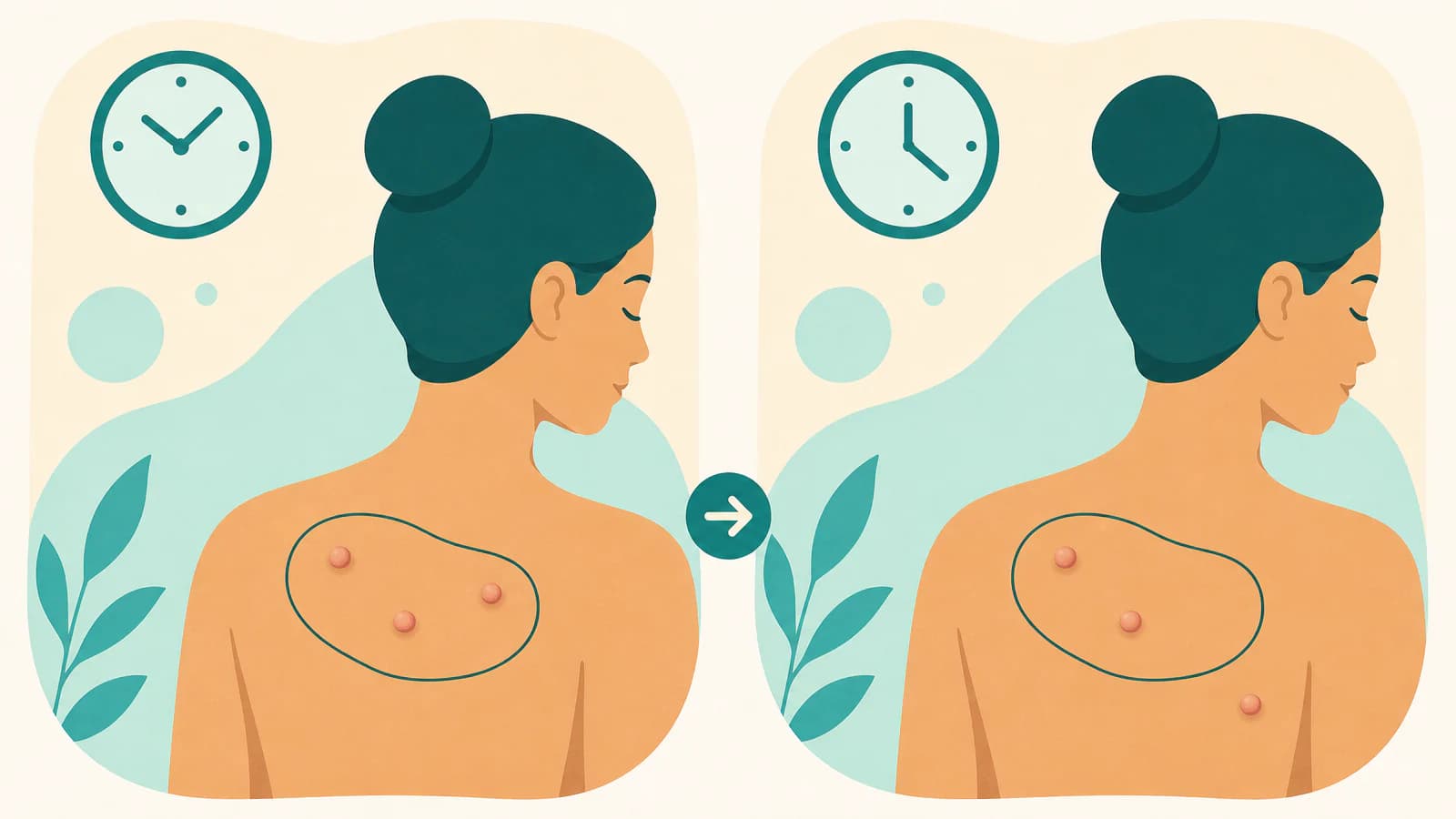
Run the pen test. Circle a few bumps with a pen and look again in a few hours. If those welts have faded and new ones have appeared elsewhere, that points toward hives. If the same bumps are still there, unchanged, that points toward bites.
Look for a dot. A tiny puncture mark or small blister in the middle of a bump leans bites. Smooth, flat-topped welts with no center lean hives.
Check the shape. Welts that change shape and merge lean hives. Round, separate bumps of similar size lean bites.
Check where. Welts across the trunk, under clothes and in several places at once lean hives. Bumps on uncovered arms, ankles and neck, or in a row, lean bites.
Check who else is itching. Pets, partners and kids with bumps lean bites. Others fine lean hives, though not always.
Think about the last day. A new food or medicine, a viral illness, a hot shower or a hard workout lean hives. A hike, a campsite, a hotel stay, a flea-prone pet or a new mattress lean bites.
What helps each, and when it backfires
Talk to a doctor or pharmacist before you start anything, especially in pregnancy, while breastfeeding, if you take other medicines, for babies and young children, or with kidney or liver disease.
For hives:
- A non-sedating over-the-counter antihistamine (cetirizine, loratadine or fexofenadine are the usual choices), taken as directed.
- A cool compress and loose clothing.
- Noting recent foods, medicines and activities, then avoiding what you suspect.
For bites:
- Wash with soap and water, then use a cold compress.
- Over-the-counter hydrocortisone 1 percent or calamine for a short time.
- An oral antihistamine if itch keeps you awake. Keep nails short.
- If you suspect bed bugs or fleas, the home needs treating too, or the bites keep coming.
Where it backfires:
- Hydrocortisone cream on hives. It does little. The itch is coming from welts that move.
- Hot showers and rubbing. Heat and friction can bring on more hives.
- Aspirin or ibuprofen. They can make hives worse in some people.
- Drowsy antihistamines. Diphenhydramine works but can leave you foggy, so check with a pharmacist.
- Scratching bites open. Broken skin invites infection. Do not pop blisters.
When to see a doctor
- Hives that keep coming back for more than a few weeks.
- Hives with swelling of the eyelids or lips.
- Bites with spreading redness, warmth, pus, red streaks or fever.
- Large blisters, or a swelling that keeps growing after a sting.
- Many bites and no clear source.
- Bites on a baby.
Still can't tell hives from bites? A photo puts your bumps next to both descriptions in one step, so you are not guessing at 2 a.m. It is a comparison, not a diagnosis.
Still not sure? Hives or bug bites?Tap to add a photo of the rash on your armAI describes what it sees, which common rashes it looks like, and when to see a doctor. It does not diagnose. One check is $4.99.Add a photo
Related skin guides
- Bed bug bites vs mosquito bites, if the bumps are in lines or clusters after sleeping.
- Heat rash vs hives, if tiny bumps came after sweating.
- Scabies vs eczema, if the itch is worst at night and you have thin lines on your hands.
- The full skin rash guide.
Frequently asked questions
Are these hives or bug bites?+
Circle a few bumps with a pen and check in a few hours. Welts that fade while new ones appear elsewhere point toward hives. Bumps that stay put for days, often with a tiny dot or blister in the middle, point toward bites.
Do hives look like bug bites?+
At first, yes. Both are raised and itchy. Hives usually vary in size, merge, and fade within about a day. Bites tend to be similar in size, keep a central dot or blister, and stay for days.
How long do hives last?+
Each welt usually fades within about a day, but new ones can keep appearing. Hives that clear within six weeks are called acute. Hives that last longer than six weeks are called chronic and are worth a doctor's visit.
Can stress cause hives?+
Stress can trigger or worsen hives in some people, along with foods, medicines, infections, heat and pressure. Often no trigger is ever found.
Why do I wake up with itchy bumps but find no bugs?+
Bed bugs and fleas hide well, and some bites are hard to spot. Hives can also appear overnight. Look at the pattern: bumps in lines or clusters on uncovered skin point toward bites, and moving welts toward hives.
Are hives contagious?+
No. Hives are a reaction in your own skin and cannot be passed on. If others at home are itching, think about bites or scabies instead.
When are hives an emergency?+
Swelling of the lips, tongue or throat, trouble breathing, wheezing, dizziness or fainting along with hives needs emergency care right away.
Sources
- American Academy of Dermatology Association. Hives: FAQs. aad.org, accessed October 2026. Link
- National Health Service (UK). Hives. nhs.uk, accessed October 2026. Link
- National Health Service (UK). Insect bites and stings. nhs.uk, accessed October 2026. Link
- Juckett G. Arthropod bites. Am Fam Physician. 2013. PubMed 24364549
- Singh S, Mann BK. Insect bite reactions. Indian J Dermatol Venereol Leprol. 2013. PubMed 23442453
- Bass M, Atkinson L, et al. Urticaria: diagnosis and management. Prim Care. 2025. PubMed 40835294
This article is for general education and is not medical advice. It does not replace a consultation with a qualified clinician. If a symptom worries you, see a doctor.