You are itching at night, you have tiny bumps, and the usual creams are not helping. Maybe it is eczema. Maybe it is scabies. The two get confused all the time.
This page shows what each tends to look like, where to look on your body, the question that matters most (is anyone else at home itching?), and why scabies needs a different plan.
Quick answer: Scabies is caused by a tiny mite. It tends to itch most at night, with small bumps and thin, wavy burrow lines in places like the finger webs, wrists, waistline and groin, and people you live or sleep with often start to itch too. Eczema is dry, itchy, long-running and not contagious, with patches in creases and usually a history of allergies or dry skin. Scabies needs prescription treatment for everyone in the household at the same time.
Itching all night and wondering if it is scabies or eczema? Add a photo of the rash, especially between the fingers or on the wrists, and the AI photo check compares it with both descriptions.
 Still not sure? Scabies or eczema?Tap to add a photo of the rash on your handAI describes what it sees, which common rashes it looks like, and when to see a doctor. It does not diagnose. One check is $4.99.Add a photo
Scabies vs eczema at a glance
| Scabies | Eczema | |
|---|---|---|
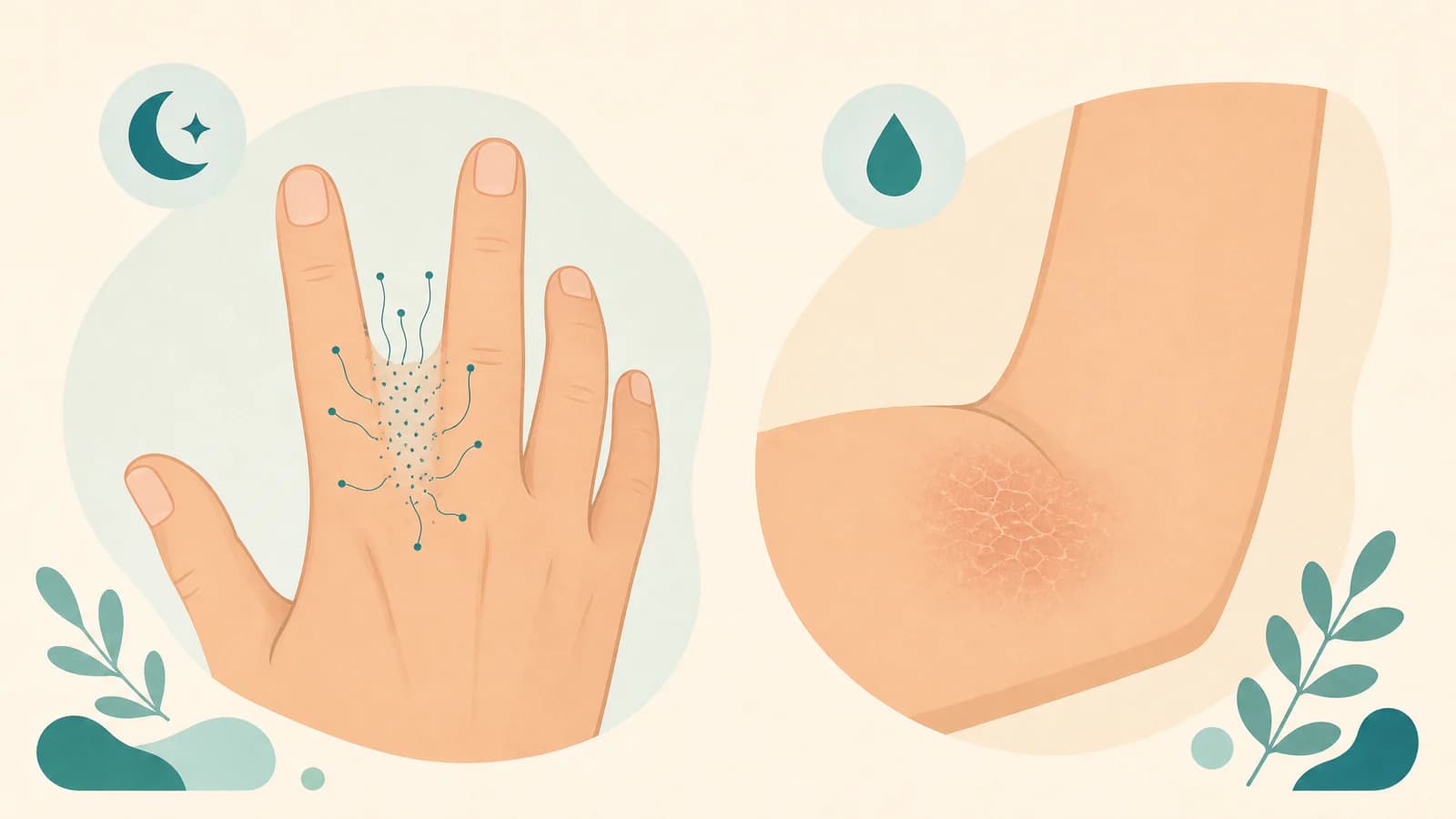
| Looks like | Tiny red bumps and thin, wavy, thread-like burrow lines, often with a dot at one end. Bumps can be hard to see on brown and Black skin, but you can feel them | Dry, scaly, blurry-edged patches that may ooze, crust or thicken from scratching |
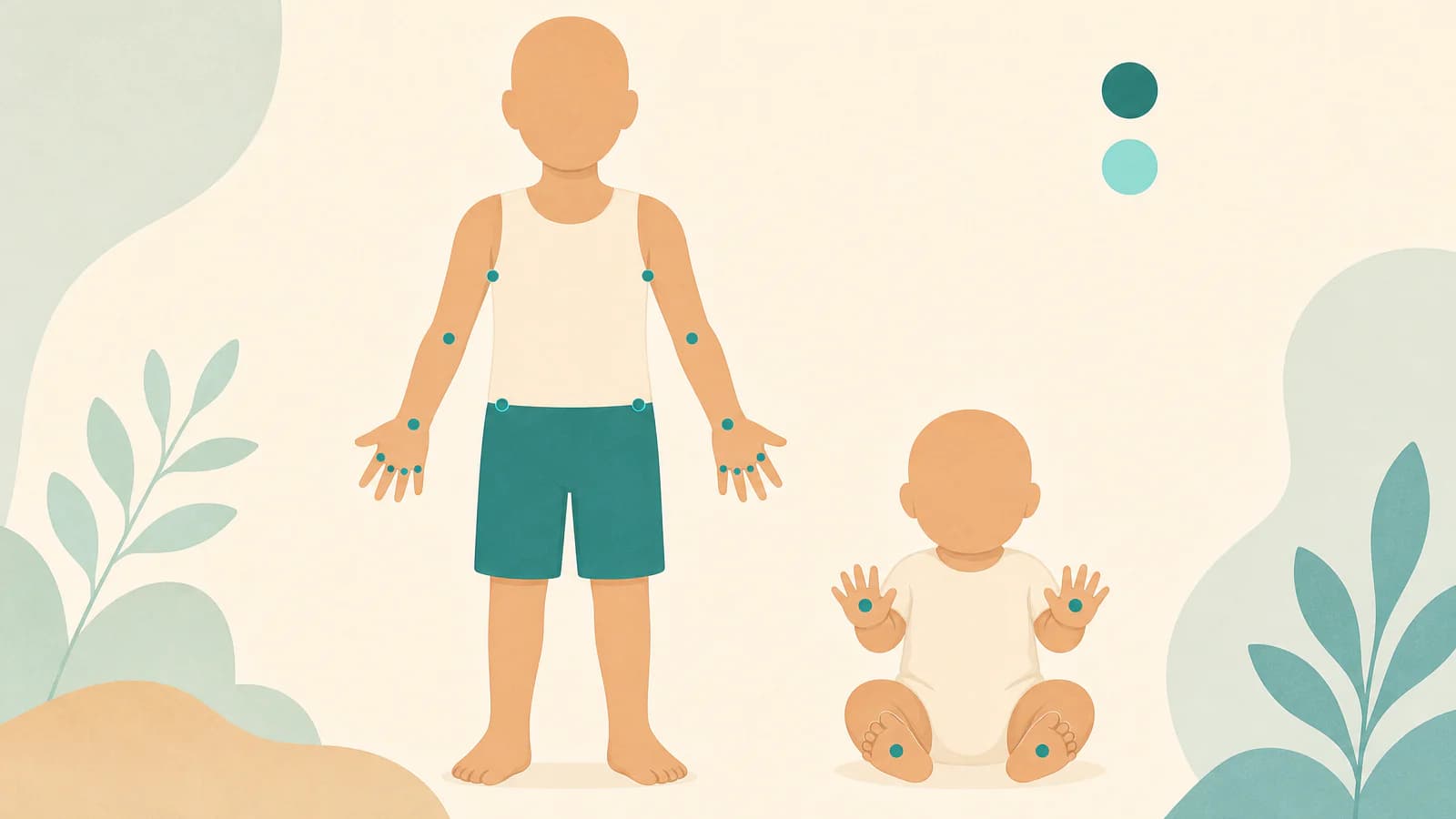
| Where on the body | Finger webs, wrists, elbows, armpits, waistline, nipples, genitals, buttocks. In babies also palms, soles, face and scalp | Skin creases (inner elbows, backs of knees), neck, hands, eyelids |
| Itch or pain | Intense itch, worst at night | Itch is the headline, often worse at night too |
| Pattern and spread | New and sudden. Spreads to people in close contact | Comes and goes in flares over months and years |
| Contagious? | Yes, through prolonged skin-to-skin contact and sometimes shared bedding or clothes | No |
| Typical trigger | Contact with someone who has scabies, crowded living or care settings | Dry skin, harsh soap, scented products, allergens, sweat, stress |
| What usually helps | Prescription scabies treatment for the whole household at once | Thick unscented moisturizer, avoiding triggers, short hydrocortisone, prescription options |
Can't tell a burrow line from a scratch mark? That is hard to judge up close, so add a photo and see the pattern next to both columns.
Still not sure? Scabies or eczema?Tap to add a photo of the rash on your handAI describes what it sees, which common rashes it looks like, and when to see a doctor. It does not diagnose. One check is $4.99.Add a photo
What scabies looks like
Scabies is caused by a microscopic mite that burrows into the top layer of skin. The intense itch is an allergic reaction to the mites and their waste.
The rash is a scatter of small red bumps. On brown and Black skin they are harder to see, but you can feel them. Look closely and you may spot burrows: thin, wavy, thread-like lines a few millimeters long, gray or skin-toned, often with a tiny dot at one end.
The favorite sites are the webs between the fingers, the wrists, elbows, armpits, waistline, nipples, genitals and buttocks. In babies and young children it can also appear on the palms, soles, face and scalp.
The itch is worse at night. It is also slow to start: the first time you get scabies, the rash can take weeks to appear (up to around eight, according to the NHS) while you are already passing it on. If you have had it before, itching can start within days.
Scabies spreads through prolonged skin-to-skin contact, so partners, family members and carers often itch at about the same time. It is very infectious. It has nothing to do with being unclean, and anyone can get it.
A severe form, crusted scabies, can affect older adults and people with weakened immunity. It looks like thick, crusted skin and is highly contagious, and needs urgent medical care.
What eczema looks like
Eczema (atopic dermatitis) is a long-running condition, not a sudden event. The patches are dry, scaly and itchy, with edges that fade into the skin around them. On light skin they look pink or red. On brown and Black skin they more often look darker brown, purple or gray.
It prefers creases: inner elbows, backs of the knees, neck, wrists, hands and eyelids. It often runs alongside asthma, hay fever or other allergies, and usually starts in childhood. The itch is the main complaint and is often worse at night. Scratching can make the skin ooze and crust, then thicken into darker, leathery patches.
It flares with dry skin, harsh soap and detergents, scented products, allergens, sweat and stress. It is not contagious. Hand eczema can affect the finger webs too, which is exactly where the two get confused. For more on eczema and its other look-alikes, see psoriasis vs eczema and eczema vs ringworm.
How to tell them apart at home
Ask who else is itching. A partner, child, roommate or carer who is itching too is the biggest clue for scabies. Eczema stays with you.
Look between the fingers. Tiny bumps and fine wavy lines in the finger webs, and on the wrists, lean scabies.
Check the other classic sites. Waistline, armpits, nipples, genitals and buttocks lean scabies. Inner elbows and backs of knees with dry, scaly skin lean eczema.
Think about the timeline. A sudden start of an intensely itchy rash in someone with no eczema history leans scabies. A lifetime of dry, itchy skin that flares and settles leans eczema.
Ask about close contact. A new partner, a shared bed, a care facility, crowded housing or a recent stay in a hostel lean scabies.
Notice the skin between the patches. Dry skin all over with creases affected leans eczema. Normal skin with scattered, tiny bumps leans scabies.
Both can itch at night, both can sit on the hands, and scratching can hide the pattern. Scabies and eczema can even occur together. A doctor can look for burrows or scrape a little skin to confirm.
What helps each, and when it backfires
Talk to a doctor or pharmacist before you start anything, especially in pregnancy, while breastfeeding, if you take other medicines, for babies and young children, or with kidney or liver disease.
For scabies:
- It needs treatment that kills the mites: a prescription cream applied to the whole body below the neck (including the head in babies and older adults) or tablets, as advised by a doctor.
- Everyone in the household and close contacts are usually treated at the same time, even without symptoms.
- Wash bedding, towels and clothes hot and dry them hot, or seal unwashable items in a bag for several days.
- Itching can last a few weeks after successful treatment. A doctor, not a second round of cream on your own, should decide if you need more.
- For sleep while you wait, a cool compress and short nails help.
For eczema:
- A thick, unscented cream or ointment daily, applied soon after a short lukewarm bath.
- Cutting back on triggers: harsh soap, scented products, hot showers.
- Over-the-counter hydrocortisone 1 percent for short courses on body flares.
Where it backfires:
- Steroid cream on scabies. It may ease the itch for a while without clearing the mites, and it can make the rash look less typical.
- Moisturizer or antihistamines alone for scabies. They calm the skin but do not kill mites.
- Treating only the person who itches most. Mites pass back and forth in a household.
- Creaming only the itchy spots. Scabies treatment goes on the whole body, as directed.
- Scratching. It can lead to infected sores such as impetigo.
When to see a doctor
- Any rash that fits scabies. It needs prescription treatment and a plan for the household.
- Night itch with bumps, especially between the fingers, for more than a few days.
- Others at home starting to itch.
- A baby or young child with an itchy rash.
- Oozing, pus, yellow crusts or a fever.
- Thick, crusted skin.
- A rash that has not responded to proper eczema care.
If the pattern fits scabies, the sooner it is treated, the sooner the household stops sharing it. Upload a photo to see how it compares, not to get a diagnosis.
Still not sure? Scabies or eczema?Tap to add a photo of the rash on your handAI describes what it sees, which common rashes it looks like, and when to see a doctor. It does not diagnose. One check is $4.99.Add a photo
Related skin guides
- Eczema vs ringworm, if a round patch is the issue.
- Psoriasis vs eczema, if the patches are thick and silvery.
- Bed bug bites vs mosquito bites, if the bumps are in lines on skin uncovered in bed and nobody else is itching.
- The full skin rash guide.
Frequently asked questions
Is it scabies or eczema? I itch all night.+
Night itch fits both. The clues that lean scabies are others at home itching, tiny bumps and thin wavy lines between the fingers or on the wrists, and a sudden start with no history of eczema. Eczema is long-running, dry, and found in creases. Only a doctor can confirm which, and scabies needs treatment.
Can scabies look like eczema?+
Yes. Scratching can leave dry, crusted, eczema-like patches and hide the burrows. That is why scabies is often mistaken for eczema, and it can also occur on top of eczema.
How do I know if I have scabies without a doctor?+
You cannot be sure. Intense night itch, burrow lines, bumps in the finger webs and wrists, and other people at home itching make it likely. A doctor can look for burrows or scrape the skin to confirm, and treatment is usually prescription-only.
How long until scabies itch starts?+
The first time, the itch and rash can take several weeks to appear, up to around eight according to the NHS. If you have had scabies before, itching can start within days.
Can scabies go away on its own?+
No. The mites need treatment, and without it the infestation continues and passes to others.
Why am I still itching after scabies treatment?+
Itching can carry on for a few weeks even after the mites are dead. If it is getting worse, new bumps keep appearing or others at home are itching, go back to the doctor instead of repeating treatment on your own.
Is scabies a sign of poor hygiene?+
No. Anyone can get scabies through close skin contact, regardless of how clean they are.
Sources
- American Academy of Dermatology Association. Scabies: Overview. aad.org, accessed October 2026. Link
- National Health Service (UK). Scabies. nhs.uk, accessed October 2026. Link
- National Health Service (UK). Atopic eczema. nhs.uk, accessed October 2026. Link
- Ziebold C, Crane JS. Scabies. StatPearls Publishing. 2025. PubMed 31335026
- Sunderkotter C, Wohlrab J, et al. Scabies: epidemiology, diagnosis, and treatment. Dtsch Arztebl Int. 2021. PubMed 34615594
- Uzun S, Durdu M, et al. Clinical practice guidelines for the diagnosis and treatment of scabies. Int J Dermatol. 2024. PubMed 38922701
This article is for general education and is not medical advice. It does not replace a consultation with a qualified clinician. If a symptom worries you, see a doctor.