You got hot, you sweated, and now your skin is covered in tiny bumps that prickle or itch. Heat rash, or hives?
This page shows what each tends to look like, why one type of hives is triggered by heat and fools almost everyone, a minute-long check you can do right now, and what helps.
Quick answer: Heat rash tends to be tiny, even, pinpoint bumps in places that sweat or stay covered, like the neck, upper chest, back and skin folds, and it fades over days once you cool down. Hives tend to be raised welts of different sizes that come and go within about a day. The look-alike is heat-triggered hives: tiny bumps that bloom within minutes of warming up and fade within hours. Dizziness or confusion in the heat is not a rash problem. That is heat illness and needs urgent help.
Broke out in tiny bumps and can't tell heat rash from hives? Add a photo and the AI photo check compares the size, spacing and location with both descriptions.
 Still not sure? Heat rash or hives?Tap to add a photo of the rash on your neckAI describes what it sees, which common rashes it looks like, and when to see a doctor. It does not diagnose. One check is $4.99.Add a photo
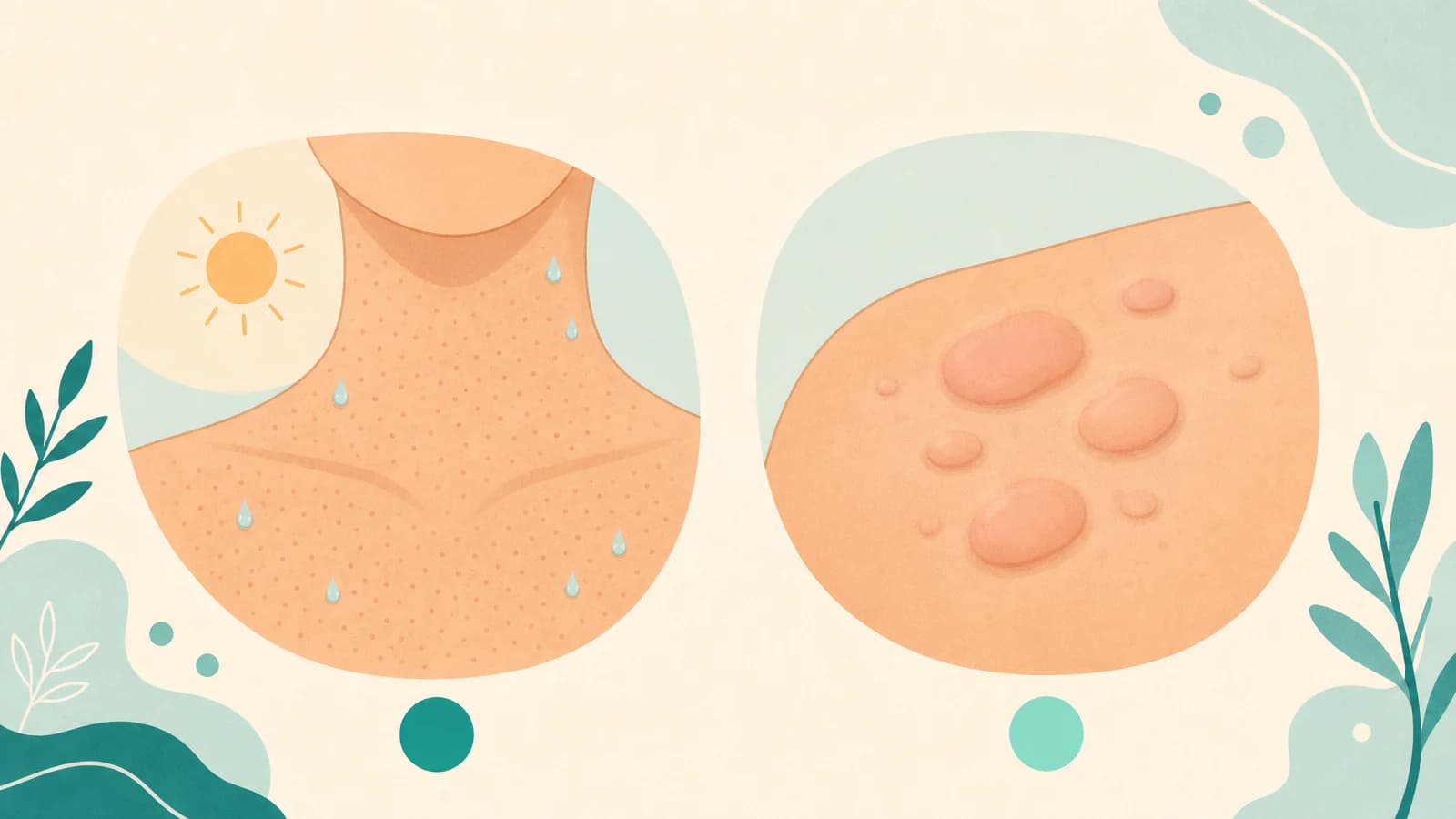
Heat rash vs hives at a glance
| Heat rash | Hives | |
|---|---|---|
| Looks like | Tiny, even, pinpoint bumps, red or skin-toned, sometimes clear fluid-filled bubbles | Raised welts of varying size, or tiny bumps with a red halo if heat-triggered |
| Where on the body | Sweaty or covered skin: neck, upper chest, back, armpits, groin, elbow creases, under breasts, waistband. Babies: neck, shoulders, skin folds | Anywhere, not tied to covered skin. Heat-triggered ones favor neck, upper chest and arms |
| Itch or pain | Prickly or stinging more than classic itch | Itchy, sometimes burning or stinging |
| Pattern and spread | Appears with sweating and lingers for days, fading once you cool down and stay dry | Welts come and go, each within about a day. Heat-triggered bumps fade within hours of cooling |
| Contagious? | No | No |
| Typical trigger | Heat, humidity, tight or heavy clothing, heavy bedding, overdressed babies | Foods, medicines, infections, pressure, cold, stress. Heat and exercise for the heat-triggered type |
| What usually helps | Cooling down, loose cotton clothing, staying dry, avoiding thick creams on the area | Non-sedating antihistamine, cool compress, avoiding triggers |
Tiny even dots or welts that keep moving? Hard to judge with a mirror and a phone flashlight, so add a photo and see it next to both columns.
Still not sure? Heat rash or hives?Tap to add a photo of the rash on your neckAI describes what it sees, which common rashes it looks like, and when to see a doctor. It does not diagnose. One check is $4.99.Add a photo
What heat rash looks like
Heat rash (miliaria) happens when sweat ducts get blocked and sweat is trapped under the skin. It shows up in hot, humid weather, with tight or non-breathable clothing, heavy bedding, fever, or in babies who are overdressed.
There are a few types. The mildest is crystal-clear, dew-drop bubbles that break easily and often do not itch. The common one, sometimes called prickly heat, is small red bumps with a prickling or stinging itch. Deeper heat rash gives skin-colored bumps and is rarer.
The bumps are tiny, similar in size and bunched up in places that stay sweaty or covered: the neck, upper chest, back, armpits, groin, elbow creases, under the breasts and along the waistband. In babies it favors the neck, shoulders and skin folds. On brown and Black skin the red may be faint, so feel for the fine, sandpapery bumps.
It tends to last as long as the skin stays hot and sweaty, then settle over a few days once you cool down. It is not contagious.
What hives look like
Hives are raised welts that come and go. They range from small to hand-sized, often merge, and each one typically fades within about a day while new ones pop up elsewhere. They blanch when pressed, and they can appear anywhere. Foods, medicines, infections, pressure, cold and stress are common triggers, and often no cause is ever found.
The real look-alike is cholinergic urticaria: tiny hives, often pinpoint to a few millimeters, each with a red flare around it. They appear when your body temperature rises. Exercise, a hot shower, sweating, spicy food and strong emotions can all set them off. They prickle or burn, usually favor the neck, upper chest and arms, and typically fade within hours once you cool down. They come back the next time you heat up.
Hives are not contagious. For the bigger welts, hives vs bug bites covers the pen test.
How to tell them apart at home
Time it. Bumps that bloom within minutes of getting hot and fade within hours point toward heat-triggered hives. Bumps that linger for days while you are hot and sweaty point toward heat rash.
Look at the size. Tiny, even, pinpoint dots point toward heat rash. Welts of different sizes that merge point toward hives.
Look at where. Skin that was covered, sweaty or in folds points toward heat rash. Bumps that ignore clothing lines point toward hives.
Look for a halo. Each tiny bump with a surrounding red flare points toward heat-triggered hives.
Notice the sensation. Prickly, stinging skin leans heat rash. Strong itch with burning leans hives.
Cool down and watch. Take a cool shower and sit in a cool room. Heat-triggered hives fade within hours. Heat rash clears more slowly, over days.
Check for clear bubbles. Tiny dew-drop blisters with little or no itch lean the mild type of heat rash.
What helps each, and when it backfires
Talk to a doctor or pharmacist before you start anything, especially in pregnancy, while breastfeeding, if you take other medicines, for babies and young children, or with kidney or liver disease.
For heat rash:
- Cool down: a cool shower, a fan or air conditioning.
- Loose, breathable cotton clothing and light bedding.
- Keep the skin dry.
- A cool compress or calamine lotion for the itch.
- For babies: lighter clothing and a cooler room.
For hives:
- A non-sedating over-the-counter antihistamine (cetirizine, loratadine or fexofenadine are the usual choices), taken as directed.
- A cool compress and loose clothing.
- Avoiding triggers you can identify. Doctors have more options for stubborn or heat-triggered hives.
Where it backfires:
- Thick or oily creams and ointments on heat rash. They can keep sweat ducts blocked. Skip petroleum jelly and heavy lotions on the area.
- Hot showers and heavy sweating. They can prolong both.
- Scratching. Broken skin can get infected.
- Hydrocortisone cream on hives. It does little.
- Aspirin or ibuprofen. They can make hives worse in some people.
- Pushing through heat illness. Dizziness, nausea, confusion or a stop in sweating is not a rash problem.
When to see a doctor
- Heat rash that has not cleared within a few days of staying cool and dry.
- Signs of infection: pus, increasing pain, swelling, warmth, fever or swollen glands.
- Hives that come back every time you heat up and get in the way of daily life.
- Hives that last more than a few weeks.
- A baby with heat rash and a fever.
- Hives with swelling of the lips, tongue or throat, or trouble breathing. That is an emergency.
Cooled down and it is still there, or it came back the moment you warmed up? Upload a photo for a comparison to bring to a doctor, not a diagnosis.
Still not sure? Heat rash or hives?Tap to add a photo of the rash on your neckAI describes what it sees, which common rashes it looks like, and when to see a doctor. It does not diagnose. One check is $4.99.Add a photo
Related skin guides
- Hives vs bug bites, for larger welts and bumps that stay put.
- Eczema vs ringworm, for a patch that does not clear.
- The full skin rash guide.
Frequently asked questions
Is this heat rash or hives?+
Time it. Tiny, even bumps in sweaty or covered skin that last for days point toward heat rash. Welts of different sizes that fade within about a day, or tiny bumps with a red halo that bloom within minutes of warming up and fade within hours, point toward hives.
Why do I get tiny itchy bumps when I sweat?+
It can be heat rash, from blocked sweat ducts, or cholinergic urticaria, a type of hives triggered by a rise in body temperature from exercise, hot showers or stress. Heat-triggered hives fade within hours. Heat rash lingers for days.
How long does heat rash last?+
It usually settles over a few days once you cool down and keep the skin dry. If it has not cleared within a few days, or you see signs of infection, see a doctor.
Can you get heat rash in winter?+
Yes. Overdressing, heavy bedding, fever and sweating under layers can block sweat ducts at any time of year, and babies are especially prone.
Is heat rash on a baby normal?+
It is common, especially in the neck, shoulders and skin folds of overdressed babies. Cooling the room and lightening clothes usually helps. A baby with heat rash and a fever should be seen by a doctor.
Can I put hydrocortisone on heat rash?+
Cooling and drying the skin is the first step. Thick creams can make heat rash worse by keeping ducts blocked. Ask a pharmacist before using hydrocortisone, especially on a baby.
What is cholinergic urticaria?+
A type of hives triggered by a rise in body temperature, from exercise, hot showers, sweating, spicy food or strong emotions. It causes tiny, prickly bumps that fade within hours of cooling. A doctor can help if it keeps coming back.
Sources
- Guerra KC, Toncar A, et al. Miliaria. StatPearls Publishing. 2024. PubMed 30725861
- Palaniappan V, Sadhasivamohan A, et al. Miliaria crystallina. Clin Exp Dermatol. 2023. PubMed 36692206
- Fukunaga A, Oda Y, et al. Cholinergic urticaria: subtype classification and clinical approach. Am J Clin Dermatol. 2023. PubMed 36107396
- American Academy of Dermatology Association. Hives: FAQs. aad.org, accessed October 2026. Link
- National Health Service (UK). Hives. nhs.uk, accessed October 2026. Link
- Bass M, Atkinson L, et al. Urticaria: diagnosis and management. Prim Care. 2025. PubMed 40835294
This article is for general education and is not medical advice. It does not replace a consultation with a qualified clinician. If a symptom worries you, see a doctor.