Your feet are peeling, itchy or both, and you cannot tell if you picked up a fungus at the gym or your skin just needs a better moisturizer. Athlete's foot or dry skin?
This page shows what each tends to look like, why one kind of athlete's foot passes for dry skin, what to check in a minute, and the cream mistakes that keep it going.
Quick answer: Athlete's foot often looks like itchy, white, soggy, peeling skin between the toes, or fine scale across the whole sole in the shape of a moccasin. It often starts on one foot and can burn or itch. Dry skin is usually rough, flaky and cracked on both feet, especially the heels, with no soggy skin between the toes and little burning. If thick moisturizer does not touch scaly soles, consider the moccasin type.
Peeling feet and no idea whether it is athlete's foot or just dry skin? Add a photo and the AI photo check compares the scale, the toe webs and the heel with both descriptions.
 Still not sure? Athlete's foot or dry skin?Tap to add a photo of the rash on your footAI describes what it sees, which common rashes it looks like, and when to see a doctor. It does not diagnose. One check is $4.99.Add a photo
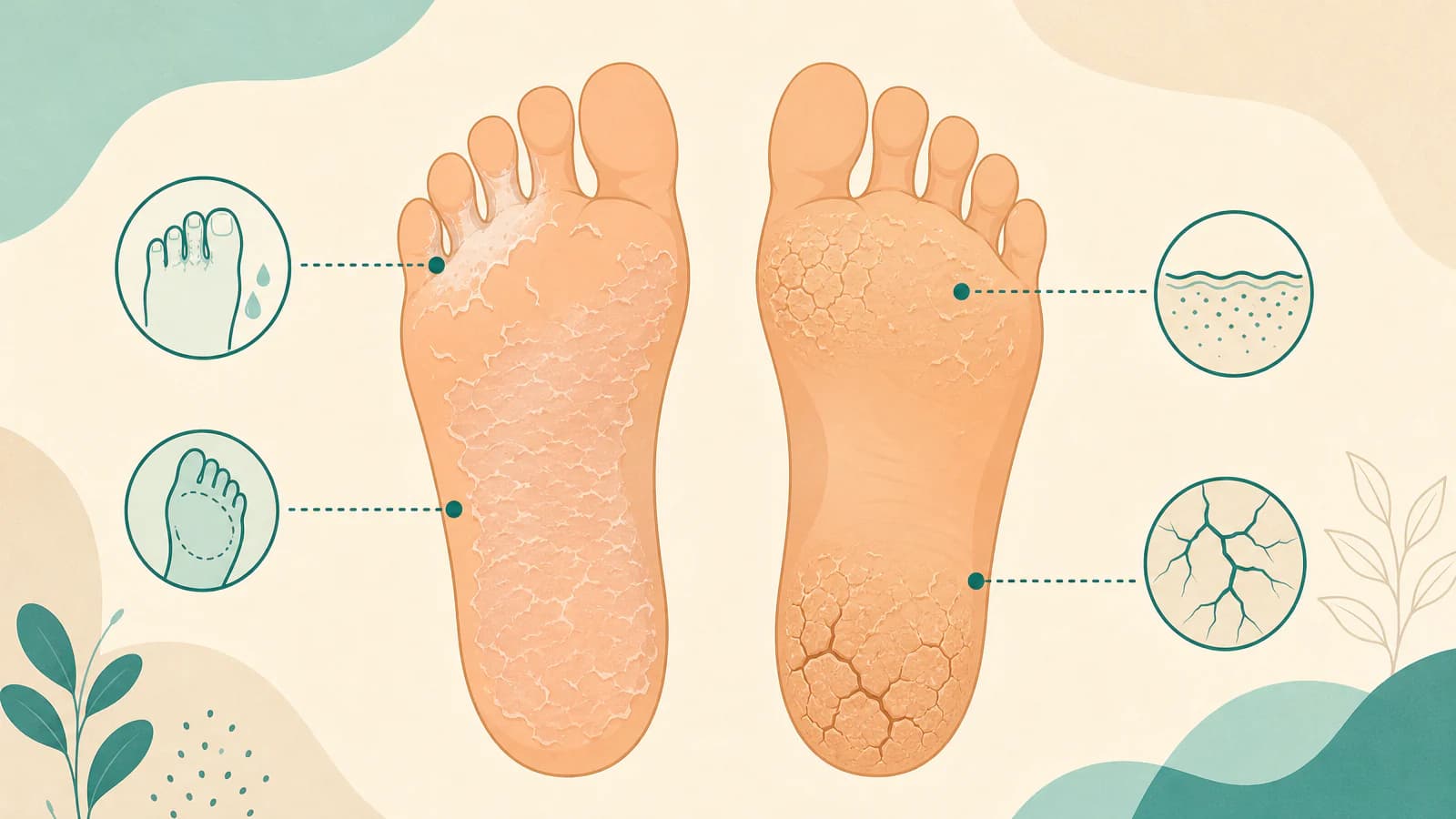
Athlete's foot vs dry skin at a glance
| Athlete's foot | Dry skin | |
|---|---|---|
| Looks like | White, soggy, peeling or cracked skin between the toes, or fine scale over the sole and sides, or small blisters on the arch | Rough, flaky, tight skin, thick calluses and cracked heels |
| Where on the body | Often starts on one foot, usually between the fourth and fifth toes, or the whole sole in a moccasin pattern | Both feet roughly equal, especially heels and balls of the feet |
| Itch or pain | Itch and burning, often worst after taking off shoes and socks | Tightness and sore cracks more than itch |
| Pattern and spread | Can spread to toenails, groin and hands. Often keeps coming back | Worse in winter, after hot showers, with harsh soap. Improves with moisturizer |
| Contagious? | Yes: locker room floors, pool decks, shared towels, damp shoes | No |
| Typical trigger | Warm, damp, enclosed shoes and socks, shared wet floors | Weather, hot water, harsh soap, open sandals, age, some conditions like diabetes |
| What usually helps | Over-the-counter antifungal cream, spray or powder, plus keeping feet dry | Regular moisturizer, urea or lactic acid foot cream for thick heels |
Moccasin-type athlete's foot loves to pass as dry skin. Add a photo of the sole and see how it lines up with both columns.
Still not sure? Athlete's foot or dry skin?Tap to add a photo of the rash on your footAI describes what it sees, which common rashes it looks like, and when to see a doctor. It does not diagnose. One check is $4.99.Add a photo
What athlete's foot looks like
Athlete's foot (tinea pedis) is a fungal infection of the skin of the feet, from the same family of fungi that causes ringworm on the body and jock itch. It comes in three main forms.
Between the toes is the classic: itchy, white, soggy, peeling or cracked skin, most often between the fourth and fifth toes. It can sting or burn and sometimes smells.
The moccasin type is dry, finely scaly skin across the sole, heel and sides of the foot, where a moccasin would sit. It may itch only a little, or not at all, which is why it is often mistaken for dry skin.
The blistering type causes small, fluid-filled blisters, usually on the arch or the sole, and they itch.
It often begins on one foot, or is worse on one. A pattern doctors recognize is two feet and one hand. Redness can be harder to see on brown and Black skin, so look for scale, peeling, soggy white patches and texture.
It spreads on locker room and pool floors, shared towels and in damp shoes and socks. Left alone it can reach the toenails, groin and other skin, and it tends to return.
What dry skin looks like
Dry skin on the feet (xerosis) makes them feel rough, tight and flaky. The skin may look dull with fine white flakes, calluses build up on the heels and balls of the feet, and deep, painful cracks (fissures) can form around the heels.
It usually affects both feet about equally. Cold weather, low humidity, hot showers, harsh soap, walking barefoot or in open sandals, age and conditions like diabetes all make it worse. There is no soggy white skin between the toes and little burning. It is not contagious, and it improves with regular moisturizer.
Other things can scale feet too: eczema (including blistering types), contact dermatitis from shoes or socks, and psoriasis. If neither athlete's foot nor dry skin fits, ask a doctor.
How to tell them apart at home
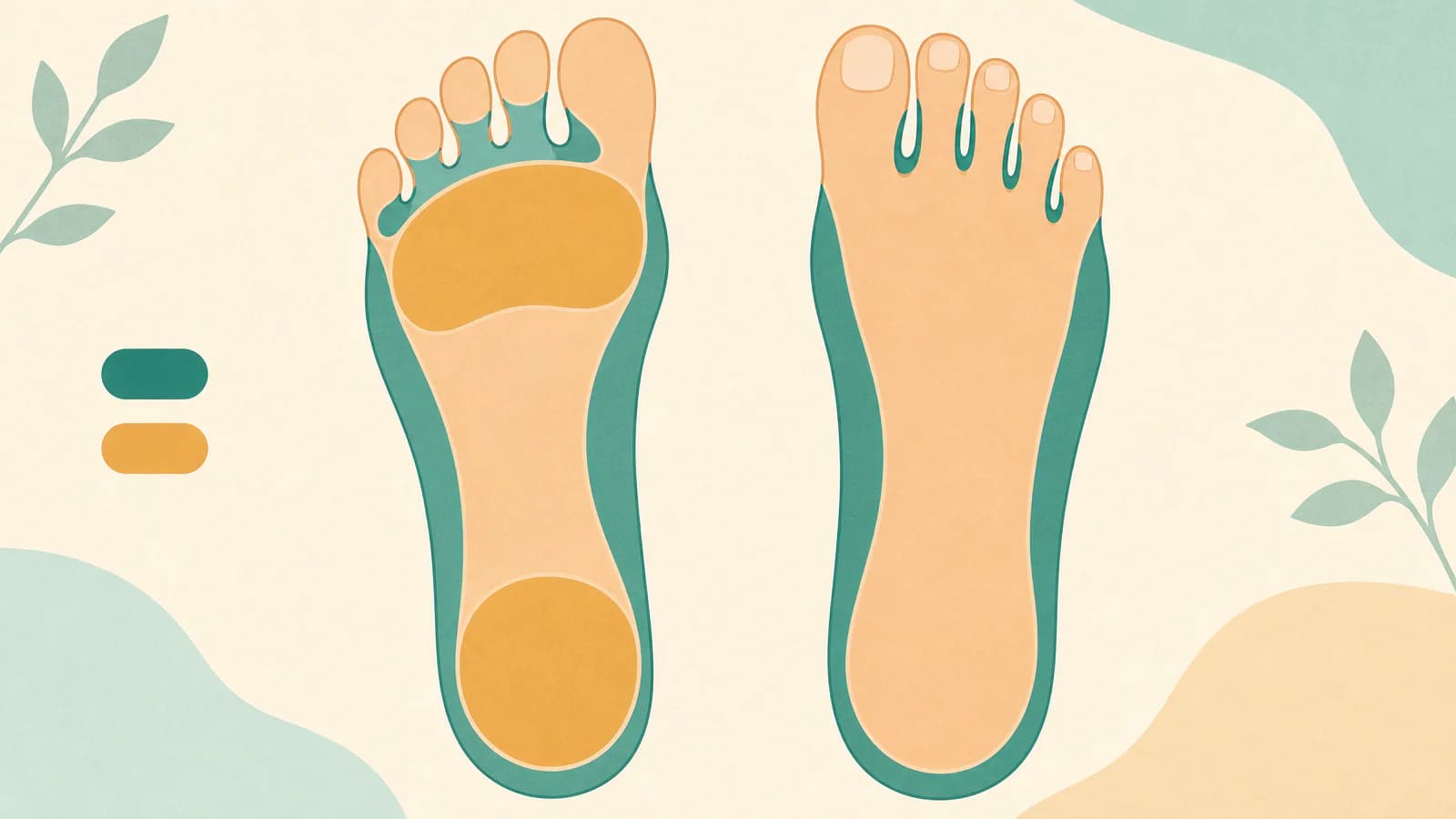
Look between your toes. White, soggy, peeling or cracked skin in the webs, especially the fourth and fifth, points toward athlete's foot.
Compare the two feet. One foot clearly worse leans athlete's foot. Both feet the same, rough and cracked at the heels, leans dry skin.
Check the sole. A fine scale over the whole sole and up the sides like a moccasin leans athlete's foot. Rough patches only on the heel and ball, with thick calluses, lean dry skin.
Notice burning and itch. Itch or burning right after you take off your shoes leans athlete's foot. Tightness and sore cracks lean dry skin.
Check your nails. Thick, yellow or crumbly toenails can go with athlete's foot.
Try thick moisturizer for a couple of weeks. If your feet soften and the scale clears, it was probably dry skin. If the scale on your soles does not budge, think moccasin athlete's foot.
Think about exposure. Gym showers, pool decks, shared towels, sweaty boots, or someone else at home with athlete's foot.
What helps each, and when it backfires
Talk to a doctor or pharmacist before you start anything, especially in pregnancy, while breastfeeding, if you take other medicines, for babies and young children, or with kidney or liver disease.
For athlete's foot:
- An over-the-counter antifungal cream, spray or powder (terbinafine, clotrimazole, miconazole or tolnaftate are the usual active ingredients) on the whole area and a little beyond.
- Use it for the full time on the label, and keep going a short while after it clears. The NHS notes that athlete's foot can keep coming back, so keep up the dry-feet habits after treatment.
- Dry between the toes well after washing.
- Change socks daily and let shoes dry out between wears.
- Wear flip-flops in public showers and on pool decks, and do not share towels.
For dry skin:
- Moisturizer once or twice a day, especially after bathing and at night under cotton socks.
- Urea or lactic acid foot cream for thick or cracked heels.
- Lukewarm water and mild soap.
- Leave thick calluses and cracks to gentle care. Do not cut them.
Where it backfires:
- Heavy moisturizer or petroleum jelly between the toes. It keeps skin soggy where fungus thrives.
- Steroid cream on athlete's foot. It can ease redness for a while while the fungus keeps spreading.
- Antifungal cream on plain dry skin. It will not help, and it can irritate.
- Stopping as soon as it looks better. That is a common reason it returns.
- Wearing the same damp shoes every day. It keeps the fungus comfortable.
When to see a doctor
- Diabetes, poor circulation or numb feet. Get any foot rash or crack checked early.
- Deep cracks that bleed.
- Spreading redness, swelling, warmth, pus or a fever.
- No improvement after the full label course of an antifungal.
- Thick, yellow or crumbly toenails.
- Painful blisters.
- A rash that keeps returning, or you are not sure what it is.
Moisturizer hasn't helped, or antifungal cream hasn't? Upload a photo before you try a third product. It is a comparison, not a diagnosis.
Still not sure? Athlete's foot or dry skin?Tap to add a photo of the rash on your footAI describes what it sees, which common rashes it looks like, and when to see a doctor. It does not diagnose. One check is $4.99.Add a photo
Related skin guides
- Eczema vs ringworm, since athlete's foot is the same fungus family.
- Psoriasis vs eczema, for other causes of scaly skin.
- The full skin rash guide.
Frequently asked questions
Is it athlete's foot or dry skin?+
Check between your toes and compare your feet. White, soggy, peeling skin in the toe webs, one foot worse than the other, or burning and itch point toward athlete's foot. Rough, cracked heels on both feet, with no soggy skin and little burning, point toward dry skin.
Why is the skin on my feet peeling but not itchy?+
Dry skin can peel without itching. So can moccasin-type athlete's foot, which scales across the sole and may itch only a little. If thick moisturizer does not improve it, ask a pharmacist or doctor.
Can athlete's foot be on the bottom of the foot only?+
Yes. The moccasin type covers the sole, heel and sides with fine scale, often with little itch. The blistering type can also stay on the arch or sole.
Can I use hydrocortisone on athlete's foot?+
It is not a good idea. A steroid cream can ease redness and itch for a while while the fungus keeps spreading, and it can change how the rash looks. An antifungal product is the usual choice, and a pharmacist can advise.
How long does athlete's foot take to clear?+
It depends on the product and the type. Follow the label for the full course and keep going a short time after it looks better. If it has not improved after the full course, see a doctor.
Is athlete's foot contagious?+
Yes. It spreads on damp floors such as locker rooms and pool decks, through shared towels and in damp shoes. Keeping feet dry and not sharing towels lowers the risk.
Will moisturizer make athlete's foot worse?+
Moisturizer on the sole is usually harmless, but heavy creams or petroleum jelly between the toes can keep the skin soggy. Use antifungal treatment for the fungus and keep the toe webs dry.
Sources
- National Health Service (UK). Athlete's foot. nhs.uk, accessed October 2026. Link
- Nigam PK, Syed HA, et al. Tinea pedis. StatPearls Publishing. 2023. PubMed 29262247
- Leung AK, Barankin B, et al. Tinea pedis: an updated review. Drugs Context. 2023. PubMed 37415917
- Crawford F, Hollis S. Topical treatments for fungal infections of the skin and nails of the foot. Cochrane Database Syst Rev. 2007. PubMed 17636672
- Yee G, Syed HA, et al. Tinea corporis. StatPearls Publishing. 2025. PubMed 31335080
This article is for general education and is not medical advice. It does not replace a consultation with a qualified clinician. If a symptom worries you, see a doctor.